Blog
Unlock Growth: Top Lead Qualification Tools 2026
By
Nelson Uzenabor

A high-intent buyer hits your pricing page after comparing options, clicks around for a minute, and disappears. No form fill. No meeting booked. No context for sales. A week later, the pipeline review shows weaker conversion from inbound, but the primary problem started earlier. The team had no reliable way to identify, qualify, and route that buyer while interest was still high.
Lead qualification tools exist to close that gap. The right one captures buying signals, asks useful follow-up questions, enriches the record, routes the lead to the right rep, and creates a clean handoff into sales or customer success. The wrong one adds another layer of admin work, creates reporting noise, and forces the team into brittle workflows that fail once traffic or lead volume increases.
Analysts at SetSmart evaluated major tools in a 2026 benchmark using real AI-driven sales conversations, with scoring that considered integrations and price-to-value. The useful takeaway is not which platform has the longest feature list. It is whether the tool matches the job your funnel needs done.
That is the lens for this guide. I group lead qualification tools into four categories: Conversational Platforms, All-in-One Hubs, Routing Specialists, and Data Platforms.
That distinction saves teams from expensive mistakes. A SaaS company with a high-volume demo funnel may need routing speed and calendar logic more than another chatbot. An SMB may get better results from a simpler all-in-one system than from stitching together three point solutions. An e-commerce team often needs identity, enrichment, and trigger-based qualification more than SDR workflow automation.
Choose the right category first. Then compare products inside that category. That usually leads to a better implementation, faster rep follow-up, and cleaner pipeline coverage.
Table of Contents
1. ChatGrow
ChatGrow is the lead qualification tool I'd put in front of most SMBs first, especially if they want to qualify buyers directly on the website instead of forcing every prospect through a form. It's built as an AI customer service platform, but the practical value for revenue teams is straightforward: it can answer questions, detect intent, collect key qualification details, and escalate qualified conversations while your team is offline.
That matters because speed and consistency break down first in smaller teams. Reps can't watch every pricing page visit, founders can't answer every pre-sales question, and support inboxes aren't built to flag commercial intent cleanly. ChatGrow solves that by putting qualification into the conversation itself.
Why ChatGrow stands out
The setup is unusually approachable. You can train the agent on your own website content, pricing pages, FAQs, and product docs, then deploy a branded widget quickly. For teams that don't want a heavy CRM-first implementation, that's a major advantage.
Its strongest features are practical, not flashy:
Smart Intent tuning: It helps the agent match how buyers ask questions, which is where many AI chat tools fail.
Smart Escalation: It gathers the details a human rep needs, then sends a cleaner handoff summary to inboxes or support tools.
Model comparison: You can compare outputs and refine quality instead of trusting one setup forever.
Analytics: You get a feedback loop for improving qualification and customer experience over time.
Predictable pricing: Standard starts at $39/month and Growth at $99/month, with a 7-day free trial.
For teams that need coverage outside business hours, that's a real operational gain. The platform is also aligned with a broader category shift toward AI-native qualification tools that can score, route, and even book calls autonomously, as noted in the earlier benchmark.
Practical rule: If your sales process starts with questions on pricing, implementation, availability, or fit, a conversational tool usually beats a longer form plus delayed follow-up.
Best fit and trade-offs
ChatGrow is especially strong for SMBs, e-commerce brands, SaaS companies, agencies, and service businesses that need 24/7 qualification on high-intent pages. It's a good fit when you want to launch fast, learn from real conversations, and avoid stitching together multiple systems before you've proven demand.
A few trade-offs are worth saying plainly:
Usage-based scaling: Message credits and storage limits mean high-volume sites may need to upgrade faster than expected.
Enterprise buying process: Enterprise pricing requires a sales conversation.
Compliance visibility: Public certification and compliance detail isn't prominent on the site, so regulated buyers should ask early.
What works well is the balance between support and sales. Many tools do one side well and feel awkward on the other. ChatGrow handles routine FAQs without losing the commercial thread, which is exactly what high-intent visitors need.
2. Qualified
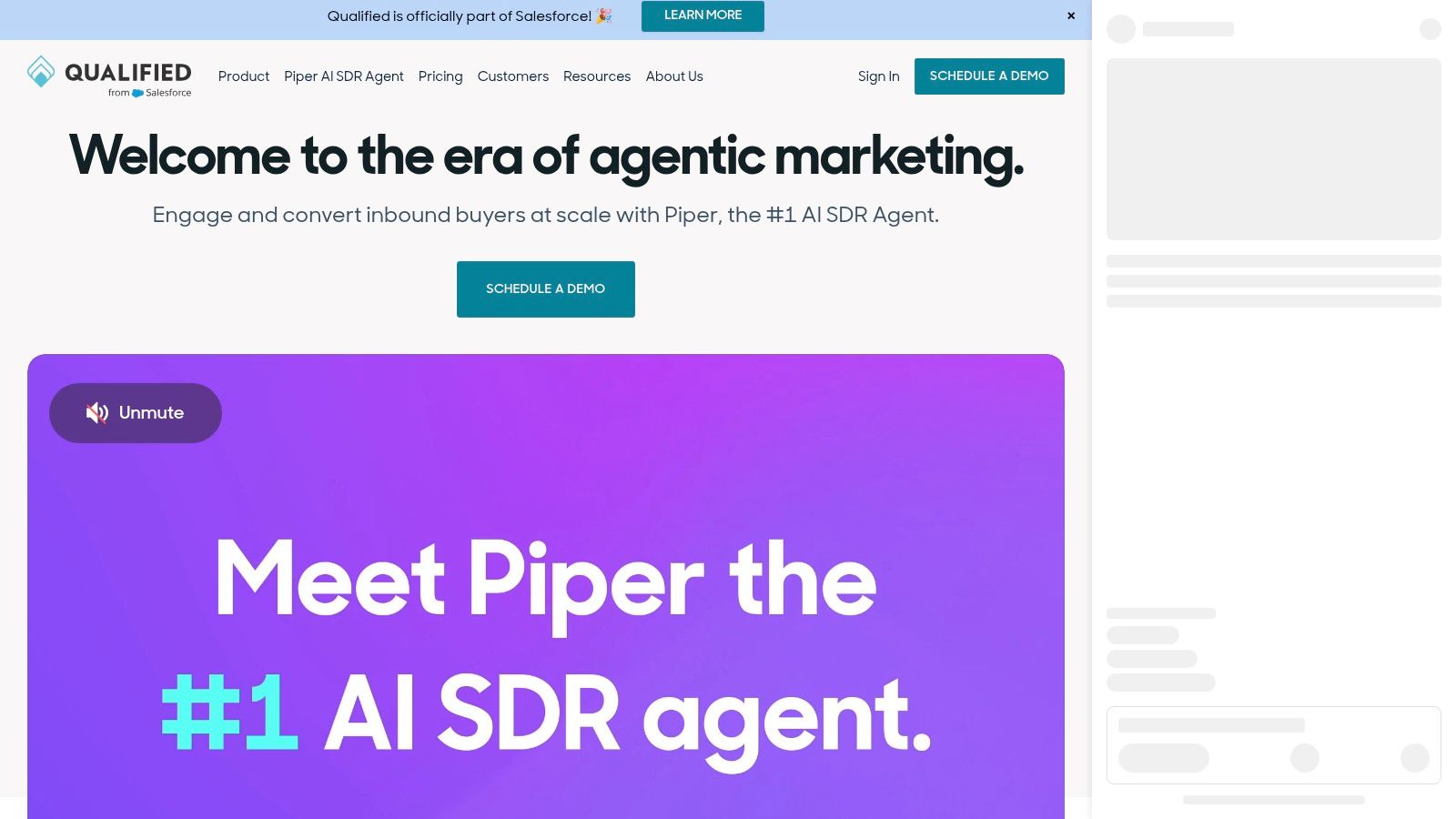
Qualified is one of the clearest examples of a conversational platform built for Salesforce-centered revenue teams. If Salesforce is the operational core of your GTM motion, Qualified removes a lot of friction that usually appears when chat, enrichment, routing, and meeting booking sit across different vendors.
Its value isn't “AI chat” in the abstract. It's the native relationship with Salesforce data and infrastructure. That lets teams qualify visitors against account data, trigger routing logic, and book meetings in real time without the sync issues that often undermine website conversion programs.
Where Qualified fits
Qualified makes the most sense for larger B2B teams with a mature Salesforce setup and enough inbound volume to justify a dedicated conversational pipeline layer. It supports chat, voice, and video, plus routing, account segmentation, waterfall enrichment, and analytics.
Here's the trade-off I'd watch carefully:
Best for Salesforce-heavy teams: If your ops team already lives in Salesforce, the native model is a strength.
Likely too much for very small teams: Founders and lean SMB teams can end up paying for complexity they won't fully use.
Pricing is sales-led: You'll need a proper buying process, not a quick self-serve trial-and-rollout path.
Qualified is strongest when your problem is orchestration inside Salesforce, not basic lead capture.
This isn't the tool I'd choose for a lightweight website qualification motion. It is a strong option when you need sales, routing, and reporting to stay tightly connected to an enterprise Salesforce environment.
3. Drift
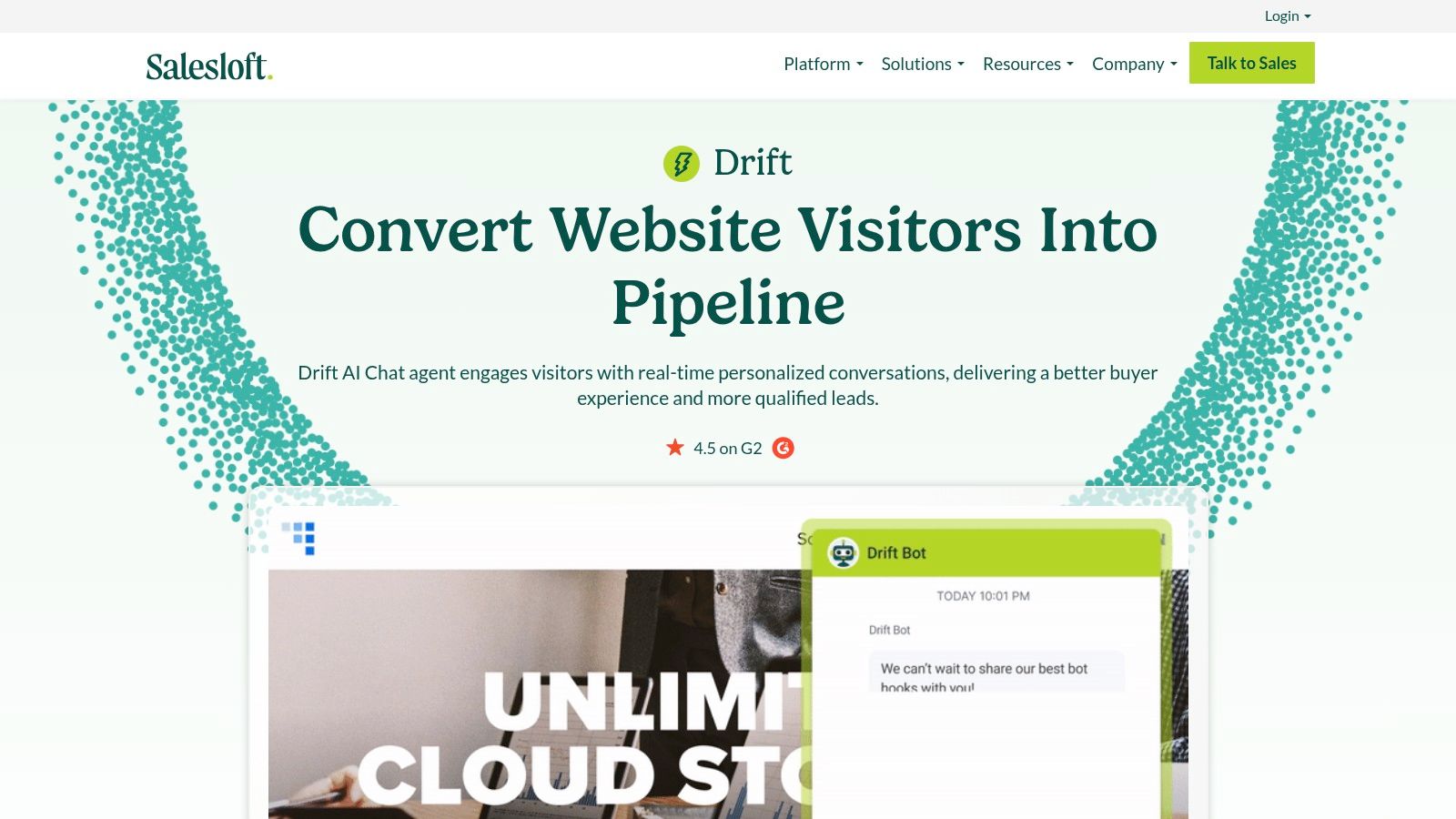
Drift still earns its place because it solved a real revenue problem early and well: the lag between a hand-raising action and an actual sales conversation. For many teams, the strongest use case isn't broad website chat. It's turning post-form intent into a meeting while the buyer is still engaged.
That's where Drift's Playbooks and Fastlane-style workflows are useful. You can trigger qualification immediately after a form submission, ask follow-up questions, and move the buyer into a booking flow without waiting for an SDR to catch up.
Best use case
Drift works best for companies that already have traffic and form volume on demo, contact, or pricing pages. If your team is trying to tighten the path from “filled the form” to “booked the meeting,” it's a serious contender.
A few practical notes:
Post-form workflows are where the platform shines: That's where Drift tends to create the cleanest handoff.
Mature ecosystem: Teams usually won't struggle to find documentation or common integrations.
Advanced features can push you upmarket: The platform can get expensive if you need the more complex capabilities.
For teams refining website conversations, it also helps to tighten the copy and response prompts around common objections before you automate. A simple tool like ChatGrow's AI reply generator can help teams draft sharper responses for qualification scenarios before they bake them into playbooks.
Drift is not the lowest-friction option on this list. It's for teams that already know where intent shows up and want to intercept it faster.
4. Intercom
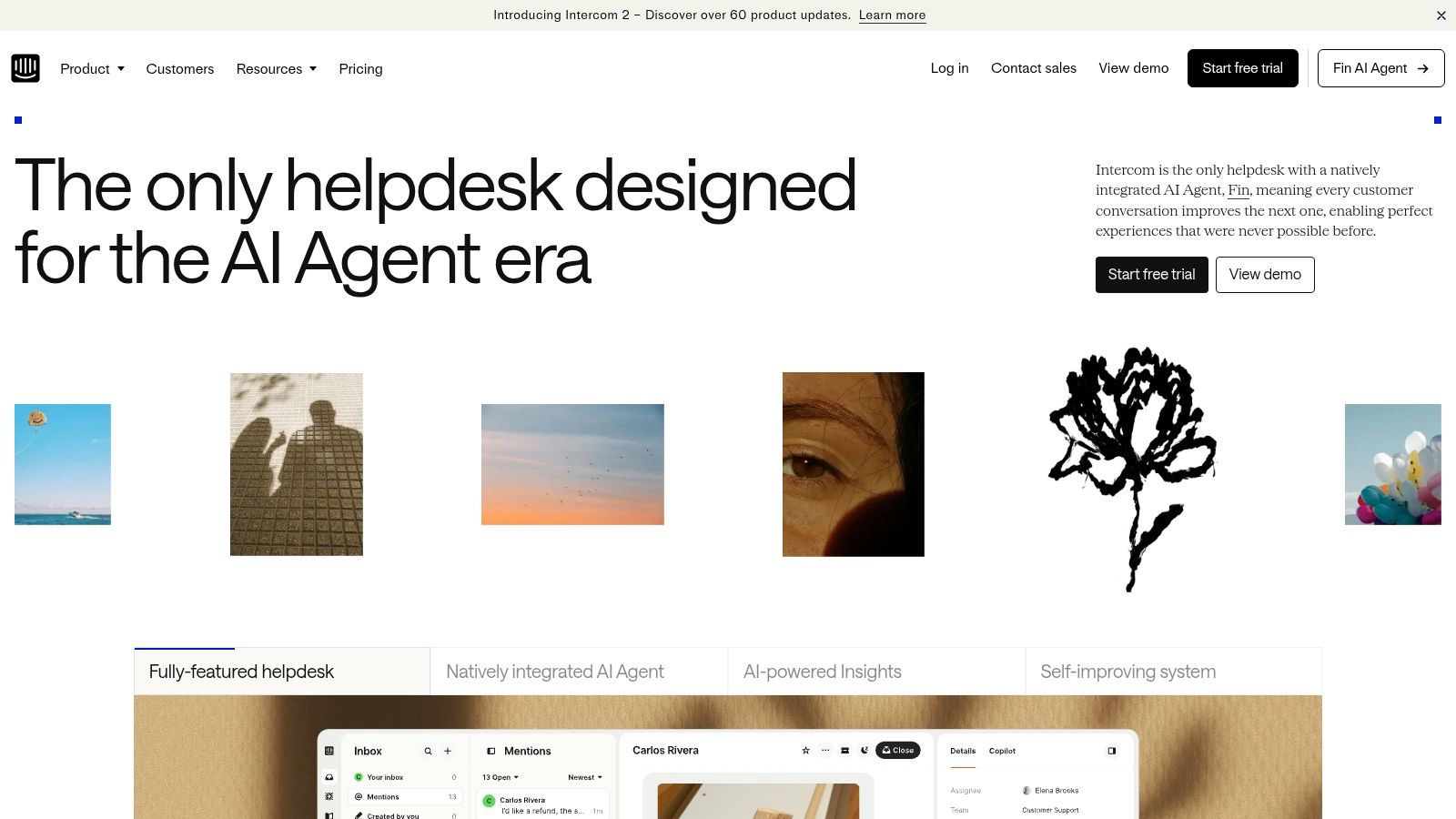
Intercom sits in an interesting middle ground. It isn't just a lead qualification tool, and that's exactly why many teams buy it. If sales and support both need to operate in the same conversation layer, Intercom can reduce the handoff mess that shows up when website chat, ticketing, and help content all live in separate systems.
Its AI agent, Fin, supports conversations across chat, email, and social. For companies where buyers ask product, pricing, onboarding, and support-style questions in the same journey, that unified setup can be more useful than a pure sales chatbot.
Where Intercom wins
Intercom is a strong fit for SMB and mid-market teams that need qualification plus support triage. It handles routing well, supports escalation to the right team, and benefits from a strong help center foundation.
The caveat is operational discipline. Intercom performs best when your help articles, docs, and internal ownership are already organized.
Good hybrid motion: Best when support and pre-sales overlap.
Fast deployment path: Easier to launch than many enterprise-first tools.
Cost forecasting matters: Seat pricing plus AI usage can become hard to predict if you don't model demand.
If your knowledge base is thin, fix that first. A tool like ChatGrow's AI FAQ generator is useful for drafting the initial question-and-answer library that conversational systems depend on.
Intercom works when the website experience is part qualification, part customer education. If you only need hard-core routing or only need deep predictive scoring, other tools fit better.
5. HubSpot
A common RevOps scenario looks like this. Marketing captures leads in HubSpot, SDRs live in the CRM, and managers report from the same database. In that setup, pushing qualification into another tool often creates more admin work than value.
HubSpot fits the all-in-one hub category in this guide. That matters because it solves a different problem than conversational tools, routing specialists, or data platforms. If the goal is to keep forms, lead scoring, routing, rep tasks, and reporting inside one operating system, HubSpot is usually the practical choice.
It scored well in the benchmark referenced earlier for inbound form capture and CRM-centric teams. The bigger point is operational fit. HubSpot is rarely the most advanced option in any single category, but it is often the easiest system to run consistently.
Why teams choose HubSpot
HubSpot covers the full qualification path inside one platform. You can capture leads with native forms and chat, enrich records through integrations, score based on firmographic and behavioral signals, then route leads with workflows and assignment rules. For SMBs and growing SaaS teams, that often beats stitching together three or four separate tools.
What tends to work well in practice:
Shared data structure: Marketing, sales, and customer success work from the same contact and company records.
Workflow control: Teams can automate handoffs, SLA alerts, lifecycle changes, and rep assignment without heavy technical support.
Broad enough feature set: It handles a lot of qualification use cases well enough, especially for companies that value speed and simplicity over specialization.
The trade-off is depth. Predictive scoring, advanced enrichment, and high-complexity routing usually need clean data, strong process ownership, and sometimes another layer on top. A small or messy database can make the scoring look smarter than it is.
I usually give this advice: buy HubSpot because you want one place to manage inbound qualification and follow-up. Do not buy it expecting category-leading conversation design, enterprise routing logic, or deep intent modeling out of the box.
If your stack is already fragmented, HubSpot can reduce handoff errors and reporting disputes. If you want to add a conversational front end without rebuilding your core process, an AI sales agent for lead qualification can sit on top and feed cleaner conversations into the CRM.
6. Chili Piper
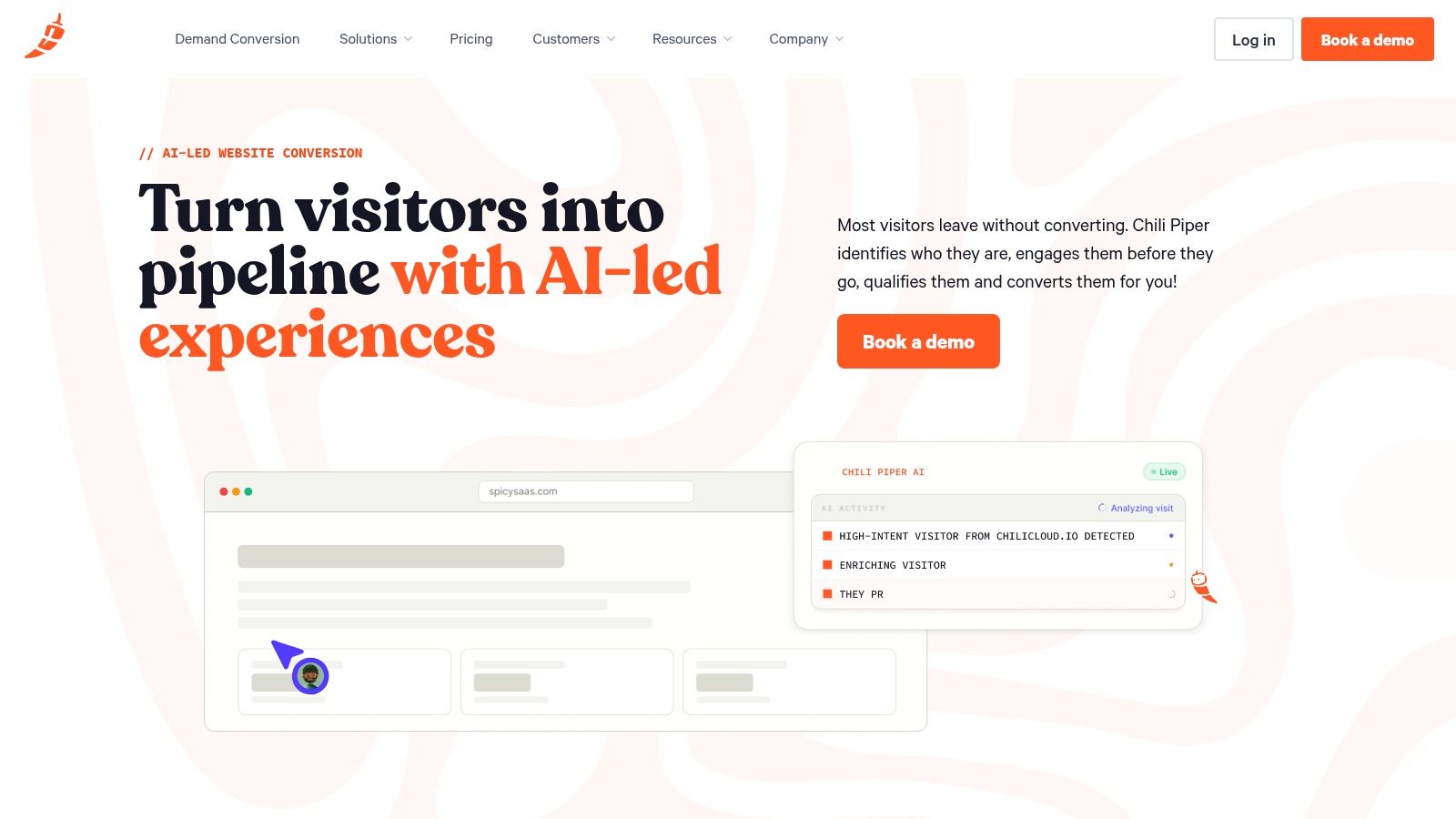
Chili Piper is a routing specialist. That distinction matters. It's not trying to be your CRM, your support hub, or your full conversational platform. It's trying to solve the narrow but expensive problem of what happens right after a buyer raises their hand.
For teams with high-intent demo forms, that focus can pay off quickly. Concierge qualifies inbound leads and lets the right prospects book instantly. Distro handles routing and distribution logic across reps and territories.
What Chili Piper does well
The best Chili Piper deployments start with one question: where is delay killing conversion? If the answer is “after the form submit,” this tool deserves serious consideration.
A few reasons revenue teams like it:
Strong post-form experience: Buyers don't wait for manual scheduling.
Flexible routing logic: Round-robin, territory rules, and custom fields are all in play.
Works well with enrichment layers: Shorter forms become easier when outside data fills the gaps.
It also pairs naturally with a conversational front end. A dedicated AI sales agent can capture and pre-qualify demand before Chili Piper takes over the booking and distribution step.
The trade-off is that Chili Piper rewards careful ops work. If your routing rules are sloppy, the tool automates mistakes faster.
This is usually not the first purchase for an early-stage company. It becomes compelling when inbound demand is real, speed-to-lead is a visible problem, and sales capacity needs cleaner distribution.
7. MadKudu
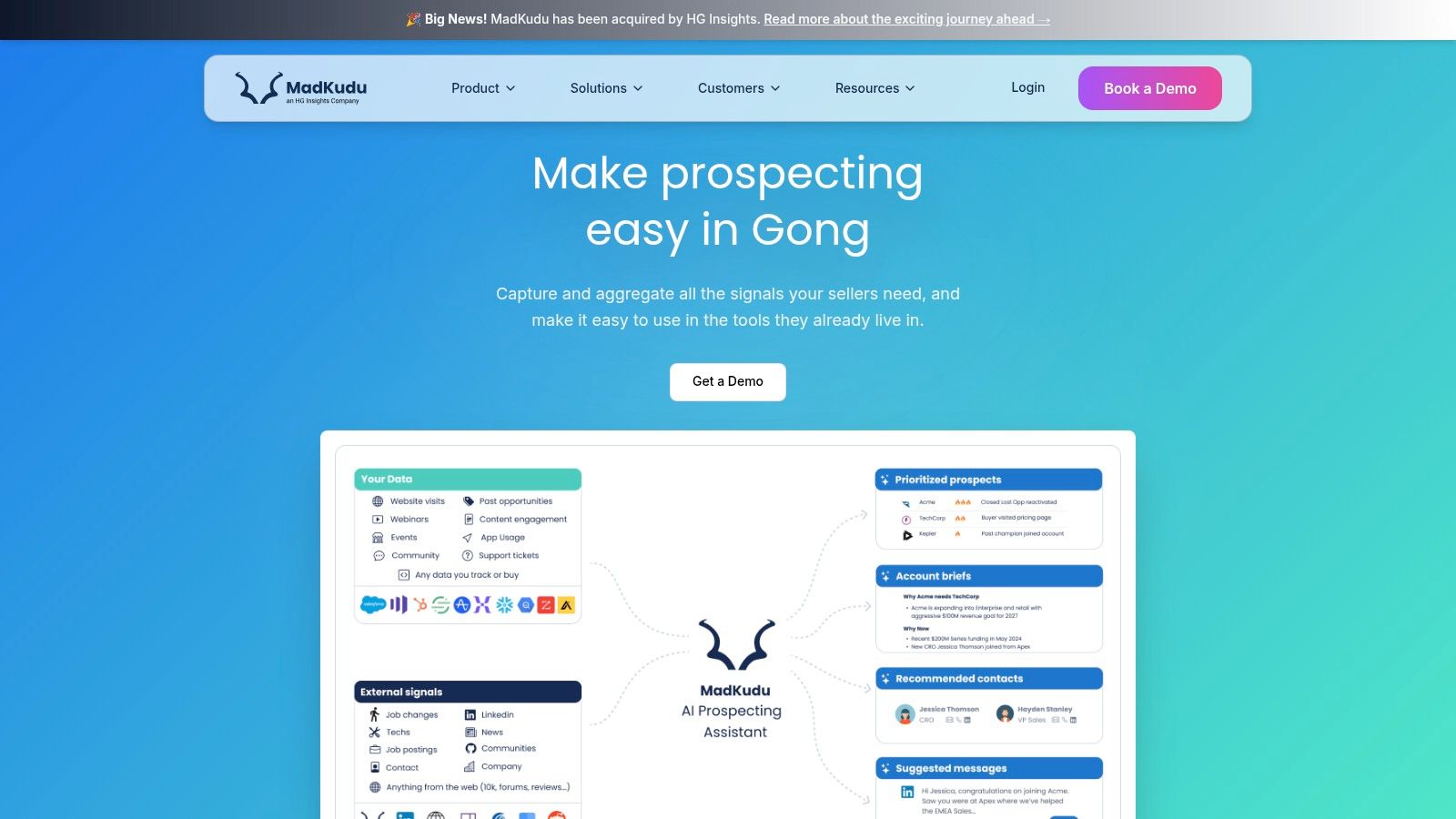
MadKudu fits the data platform category, but its real niche is narrower than that. It is built for product-led SaaS teams that need qualification to reflect what users do inside the product, not just what they submitted on a form.
That distinction matters. In PLG motions, the usual MQL logic breaks down fast. A trial signup from a perfect-fit account may go nowhere, while a smaller account with heavy usage can turn into a real pipeline opportunity. MadKudu is useful because it treats fit and intent as separate signals, then helps ops and sales act on each one differently.
Best for product-led SaaS
MadKudu pulls together firmographic fit, technographic context, product usage, and marketing engagement to score both leads and accounts. For SaaS teams, that is often a better model than relying on page views and form fills alone.
What it tends to do well:
PLG-aware scoring: Better suited to free trial, freemium, and product-qualified lead motions than traditional lead scoring tools.
Operational handoff: Scores can feed CRM and marketing automation workflows for routing, prioritization, and SLA management.
Fit versus intent separation: Teams can create different plays for strong-fit accounts that need nurture versus high-activity users that need sales attention now.
The trade-off is setup complexity.
MadKudu works best when the basics are already in place. You need clean account and user data, product event tracking that sales trusts, and enough historical conversion data to train useful models. Without that foundation, the output can look advanced while still producing noisy prioritization.
That is also the practical dividing line in this guide's framework. Conversational tools help capture and qualify demand in real time. Routing specialists help distribute it quickly. MadKudu belongs in the data platform group because its job is to improve the quality of scoring and prioritization behind the scenes.
It is usually a strong fit for SaaS companies with a real PLG motion. It is usually a poor fit for SMBs that are still handling qualification manually or e-commerce teams that care more about purchase intent and onsite conversion than account scoring depth.
8. Clearbit
Clearbit belongs in the data platform category. It's less about running the conversation and more about improving the quality of what you know before or during that conversation. In qualification terms, that usually means shorter forms, better routing inputs, and stronger personalization.
The core value is enrichment. If your form asks for too much, conversion drops. If it asks for too little, reps can't qualify effectively. Clearbit helps balance that by appending company and contact attributes so your team can collect less and still know more.
Where Clearbit adds value
Clearbit is especially useful when your inbound flow already exists and you want to reduce friction without sacrificing quality. It can identify visiting companies, enrich records, and support routing logic based on firmographic or technographic context.
Its practical strengths:
Form shortening: Good for reducing buyer effort on high-intent pages.
Reveal-style identification: Useful when account-level website traffic matters.
Established integrations: Easier to operationalize than many niche enrichment tools.
The trade-off is accuracy variance. Some segments, regions, or company types enrich cleanly. Others don't. Test with your own ICP before you make it central to qualification logic.
Clearbit isn't the whole answer. It's an input layer. Teams get the best results when they use it to improve a process that already works, not to rescue a weak funnel.
9. 6sense
6sense is account-level qualification for companies running a serious ABM motion. If your sales process depends on identifying in-market accounts before they submit a form, 6sense is built for that problem.
This is not a simple “score the lead” tool. It combines predictive modeling, intent data, enrichment, sales intelligence, and workflows to help teams prioritize the right accounts and contacts for outreach.
When 6sense makes sense
6sense is best when your team already has an ABM discipline, target account list thinking, and content or outreach plays built around account stages. In that environment, the platform can become a strong prioritization layer.
It's strongest in these scenarios:
Account-centric selling: Better for coordinated outreach than form-only qualification.
Sales and marketing alignment: Useful when both teams act on the same account signals.
Trialability: A free Sales Intelligence tier gives some teams a lower-risk entry point.
A warning, though. Small teams often buy platforms like this too early. The software may be powerful, but if the team isn't ready for account-based execution, complexity wins.
Enterprise intent platforms don't create strategy. They amplify the strategy you already have.
6sense can be excellent. It can also become shelfware if you don't have the operating model to support it.
10. ZoomInfo
ZoomInfo is another data-heavy option, but it leans more directly into B2B contact and company intelligence for enrichment, validation, routing, and outbound qualification. If your team needs a large dataset to support both inbound and outbound workflows, ZoomInfo is often on the shortlist.
For inbound programs, the immediate value usually comes from form completion and data cleanup. For outbound teams, it supports prospecting and prioritization. That flexibility is why larger organizations often standardize on it despite the cost.
Practical fit
ZoomInfo is a strong fit for B2B teams that already know data quality is hurting qualification. Missing fields, bad routing inputs, duplicate records, and incomplete account context all slow response and distort scoring.
What stands out:
Broad B2B data coverage: Helpful for enrichment and sales distribution logic.
Strong Salesforce connectivity: Often attractive for enterprise stacks.
Useful across motions: Inbound routing and outbound research can live in the same platform.
The main caution is simple. Pilot first. Data quality varies by region, vertical, and persona, and contract pricing can be a poor fit for smaller teams that won't use the breadth of the platform.
If your qualification process falls apart because your records are weak, ZoomInfo can help. If your actual problem is website conversion or sales responsiveness, start elsewhere.
Top 10 Lead Qualification Tools Comparison
Product | ✨ Core Features | ★ UX / Accuracy | 💰 Pricing & Value | 👥 Target Audience | 🏆 Standout USP |
|---|---|---|---|---|---|
🏆 ChatGrow | ✨ Custom, on‑brand agents; Smart Intent & Smart Escalation; analytics; retraining | ★★★★☆, accurate, empathetic responses | 💰 Standard $39/mo (500 msgs); Growth $99/mo (4k msgs); 7‑day trial | 👥 SMBs & growth teams needing fast, high‑intent coverage | 🏆 Fast onboarding & deploy in <1 hr; predictable message‑credit pricing |
Qualified | ✨ Salesforce‑native AI SDR (chat/voice/video); deep SFDC connectivity | ★★★★☆, best for Salesforce stacks | 💰 Sales‑led; enterprise pricing | 👥 Salesforce‑centric revenue teams | Native Salesforce infra + real‑time data sync |
Drift | ✨ Fastlane Playbooks; Conversational Landing Pages; post‑form routing | ★★★★☆, proven form→meeting flows | 💰 Sales‑led; advanced features on higher tiers | 👥 Marketing & sales teams focused on form conversions | Playbooks that convert form submits into instant meetings |
Intercom | ✨ Fin AI agent; routing, help center & ticketing unified | ★★★★☆, good balance of automation & live support | 💰 Seats + AI usage; forecast costs | 👥 SMB/SME needing combined support & sales chat | Unified chat + help center with SLA routing |
HubSpot | ✨ Predictive lead scoring; workflows; native chat & forms | ★★★★☆, strong when on HubSpot CRM | 💰 Tiered (Pro/Enterprise); add‑ons can add cost | 👥 Teams already on HubSpot seeking end‑to‑end flow | Single data model simplifies capture→score→route |
Chili Piper | ✨ Concierge booking; Distro routing; form shortening & enrichment | ★★★★☆, speeds form‑to‑meeting conversion | 💰 Annual/enterprise contracts | 👥 Teams on pricing/demo pages needing instant booking | Rules‑based real‑time booking & territory routing |
MadKudu | ✨ Fit & Likelihood‑to‑Buy models; engagement scoring; CRM sync | ★★★★☆, excellent with solid historical data | 💰 Sales‑led; implementation required | 👥 PLG/SaaS teams with trial/freemium funnels | Clear separation of fit vs intent for precise routing |
Clearbit | ✨ Enrichment APIs; Reveal (IP company ID); form shortening | ★★★☆☆, accuracy varies by segment | 💰 Credit/usage model; monitor costs | 👥 B2B teams needing firmographic/tech data | Reveal + form shortening to reduce form friction |
6sense | ✨ 3rd‑party intent + predictive scoring; alerts & workflows | ★★★★☆, powerful for ABM motions | 💰 Enterprise pricing; can be costly | 👥 ABM & enterprise revenue teams | Intent signals + account‑level predictive prioritization |
ZoomInfo | ✨ Enrichment & FormComplete; deep Salesforce integrations | ★★★☆☆, large dataset; regional variance | 💰 Contract pricing; pricey for small teams | 👥 Sales teams needing broad B2B contact/company data | Extensive dataset + form prefill/validation tools |
How to Choose Your Lead Qualification Tool
A team adds a new qualification tool, books a few demos in week one, and calls the rollout a win. Thirty days later, reps are still chasing weak leads, high-intent buyers still wait too long for follow-up, and marketing is arguing with sales about lead quality. The tool was not the actual problem. The team bought for features instead of for the bottleneck.
Start with the point of failure in your funnel. If visitors need answers before they will convert, look at conversational platforms. If the handoff breaks after the form fill, routing specialists usually matter more. If reps are talking to the wrong accounts, data platforms deserve attention. If your team wants capture, CRM, scoring, and reporting in one system, an all-in-one hub can simplify the operation.
This is why category fit matters more than vendor hype.
The four categories that matter
Conversational Platforms qualify leads in real time on the website, in chat, or inside support flows. ChatGrow, Qualified, Drift, and Intercom sit here, but they are not interchangeable. Some are stronger for B2B sales conversations, some are better for support plus qualification, and some require more operational work to keep routing and handoff logic clean. Choose this category when buyers ask questions before they book, or when your team needs coverage outside business hours.
All-in-One Hubs combine lead capture, CRM, scoring, routing, and reporting under one data model. HubSpot is the clearest example in this list. The upside is simpler administration and fewer sync problems. The trade-off is flexibility. Teams often move faster inside a hub they already use, but they can hit limits if they need specialized routing logic or deeper predictive models later.
Routing Specialists focus on speed between form submission and meeting assignment. Chili Piper is the obvious example. These tools do one job very well: they reduce the lag between inbound intent and the right rep response. They make sense when qualification criteria are already defined and the primary issue is slow scheduling, territory assignment, or rep availability.
Data Platforms improve the inputs behind qualification. MadKudu, Clearbit, 6sense, and ZoomInfo each help in different ways. MadKudu is useful when product usage and fit should shape prioritization. Clearbit and ZoomInfo are more about enrichment and form improvement. 6sense is stronger for account-level intent and ABM prioritization. This category works best after the process itself is stable. Better data does not fix a broken handoff.
Buy for the first constraint in the journey. Add more intelligence only after that constraint is under control.
Recommendations by business type
For SMBs, simpler usually wins. A tool that your team can launch in days and maintain without a dedicated RevOps bench is often the right call. ChatGrow is a practical option if the priority is always-on website qualification and faster response without a heavy implementation. HubSpot also makes sense if the business already runs there, because keeping forms, CRM records, and routing in one system reduces admin work. I would skip enterprise-first platforms unless the sales motion already has enough volume and complexity to justify them.
For e-commerce businesses, classic B2B lead scoring often misses the actual buying signal. Product questions, shipping concerns, compatibility checks, and pricing objections show up in the conversation itself. That makes conversational tools more useful than heavy account-scoring platforms for many e-commerce teams. ChatGrow and Intercom are usually better fits here than tools built around ABM or sales development workflows.
For SaaS companies, the right choice depends on the go-to-market model. Product-led SaaS teams should look closely at MadKudu because trial behavior, activation events, and usage patterns can matter more than firmographics. Sales-led teams with heavy inbound demo volume often get more immediate value from Drift or Chili Piper because faster qualification and scheduling produce results quickly. Enterprise SaaS teams that live in Salesforce often prefer Qualified. HubSpot fits companies that want one operating system and are willing to accept some trade-offs in specialization.
For agencies, repeatability matters. The tool has to be deployed quickly, adapted across client accounts, and maintained without a long implementation cycle. ChatGrow can work well in that setup because it can be trained on each client's site content, FAQs, and documentation without rebuilding the whole stack. Intercom can also fit agency clients that need support and qualification in the same workflow.
A good lead qualification tool should do three things reliably: capture intent, route the right conversation to the right team, and cut wasted rep time. If it only adds more scoring fields or another dashboard, it will not fix much.
If you want a practical place to start, ChatGrow is one of the more accessible options for SMBs, SaaS teams, e-commerce brands, and agencies that need 24/7 coverage without a long implementation. You can train an agent on your own pricing pages, FAQs, and docs, go live quickly, and qualify buyer conversations before they stall in a form queue or shared inbox.
Prepared with Outrank tool
Related Posts
Continue Reading
More articles from the ChatGrow Team.