Blog
Optimize Your Lead Qualification Process for 2026 Success
By
Nelson Uzenabor

Your inbox is full of demo requests, contact form fills, chatbot conversations, and “quick question” emails. Your sales team is busy all day. Marketing says lead volume looks healthy. Yet revenue feels harder to predict than it should, and too many calls end with some version of “not a fit,” “not now,” or “wrong person.”
That usually isn't a lead generation problem. It's a lead qualification process problem.
Small businesses feel this faster than larger teams do. When you only have a few people handling sales, every weak lead costs real time. A good qualification system fixes that. It helps you decide who deserves immediate follow-up, who needs nurturing, who should be routed elsewhere, and who shouldn't enter the pipeline at all. The modern version isn't just a spreadsheet and a rep with good instincts. It combines clear criteria, lightweight automation, and AI chat agents that capture context before a human ever gets involved.
Table of Contents
Why Your Sales Team Needs a Lead Qualification Process
A sales team can stay busy and still waste most of its energy. That's what happens when every inbound lead gets treated like a real opportunity. Reps jump from call to call, answer basic questions, chase vague interest, and spend prime selling time on people who were never likely to buy.
A structured lead qualification process creates a filter before that happens. It tells the team which leads fit your business, which ones show enough intent to justify outreach, and which ones need a different path. That discipline pays off. A mature lead qualification process yields a 9.3% higher sales conversion rate compared to basic processes, according to Marketo research cited by Sopro.
That stat matters because conversion gains in a small business don't come from abstract efficiency. They come from fewer wasted calls, better follow-up, and better timing. When qualification is weak, marketing and sales usually start blaming each other. Marketing says sales ignores leads. Sales says marketing sends junk. In practice, both teams are often working without a shared definition of a qualified opportunity.
What a process actually protects
The core asset you're protecting isn't just pipeline quality. It's rep attention.
Sales time: Good reps shouldn't spend their mornings figuring out whether a contact is a student, job seeker, support requester, or buyer.
Response speed: When weak leads clog the queue, strong leads wait longer than they should.
Forecast quality: If the pipeline is full of poorly qualified deals, your forecast becomes a confidence game.
Team energy: Reps lose trust in inbound channels when too many conversations go nowhere.
Practical rule: If your team says “we're getting leads, but not the right leads,” define qualification before you buy more traffic.
What works for SMBs
Small teams don't need a giant sales ops buildout. They need a process that is clear enough to run every day. In most cases, that means:
A simple ideal customer profile.
A qualification framework that reps can use naturally.
A scoring model that combines fit and intent.
Automation for early filtering.
Clear handoffs when a lead is ready.
That's the machine. Everything else is refinement.
Laying the Foundation Defining Your Ideal Lead
Most qualification systems fail before scoring even starts. The team never gets specific about who should enter the pipeline. That mistake is expensive. Poor lead definition directly causes 67% of lost sales deals, according to industry findings summarized by Launch Leads.
If you skip this step, the rest of the process turns into noise. You'll ask better questions than before, but you'll still ask them of the wrong people.

Start with firmographic fit
Your ideal customer profile, or ICP, should begin with traits you can verify quickly. For a small business, that matters because these are the easiest criteria to automate and the easiest to keep consistent across forms, chat, and CRM workflows.
Start by answering these questions:
Industry: Which industries buy fastest, stay longest, or need the least education?
Company size: Are you built for solo operators, small teams, or mid-market companies?
Geography: Do you sell only where your team can support buyers well?
Business model: B2B and B2C leads often need different qualification paths.
Use case fit: Which type of company feels your product as a need, not a nice-to-have?
A weak ICP sounds like “we work with startups and growing businesses.” A useful ICP sounds like “service businesses with small teams that need faster inbound response and can buy without a long procurement cycle.”
Add pain points and buying context
Firmographics tell you whether a company resembles past customers. They don't tell you whether the person visiting your site is ready to move.
That's where the second layer comes in:
Pain point: What problem pushes them to look for a solution now?
Urgency: Is the issue tied to lost leads, slow support, missed follow-up, or manual work?
Decision role: Are they a founder, marketer, sales lead, or researcher?
Internal trigger: Did something happen that makes the problem more urgent?
Expected outcome: Are they trying to reduce admin work, improve speed, or route leads better?
A usable ICP combines fit and pressure. Good-fit companies without pain stall. High pain without fit creates long sales cycles and messy onboarding.
Three simple ICP examples
Different businesses should qualify for different realities. That sounds obvious, but teams often copy someone else's framework and force it onto a business model that doesn't match.
For a SaaS company
Best-fit lead: a team already handling recurring inbound questions or demo demand.
Likely pain: slow response, inconsistent qualification, limited after-hours coverage.
Bad fit: visitors looking for one-off consulting or custom service work.
For an e-commerce brand
Best-fit lead: a shopper with clear purchase intent or a wholesale buyer asking about volume, availability, or policies.
Likely pain: abandoned purchase questions, shipping concerns, product comparison friction.
Bad fit: general inquiries that belong in support, not sales.
For a marketing agency
Best-fit lead: an owner or marketing lead with an active demand problem and a service need tied to revenue goals.
Likely pain: weak lead flow, poor conversion from existing traffic, inconsistent follow-up.
Bad fit: freelancers seeking jobs, vendors pitching services, or students doing research.
A practical ICP fits on one page. If yours needs a workshop every time a new rep joins, it's too abstract.
Building Your Qualification Framework and Scoring Model
A clear ICP helps you recognize a good lead. A qualification framework helps your team ask the right questions. A scoring model helps you make the same decision every time, whether the lead came through a form, a rep conversation, or an AI chat.
Small businesses usually break this in one of two ways. They build a scoring sheet nobody updates after week two, or they leave qualification to instinct and end up with inconsistent follow-up. The fix is a model simple enough to run without a sales ops team, but structured enough that marketing, sales, and automation all use the same logic.
Use frameworks to guide the conversation
Frameworks still matter because they stop reps from skipping the basics. Crunchbase notes in its guide to lead qualification that structured qualification frameworks are widely used because they improve consistency and pipeline visibility.
BANT is still useful for many SMBs, especially early on. The practical version looks like this:
Budget: Confirm whether the problem is expensive enough to justify solving. A direct budget question can wait.
Authority: Find out whether the contact can buy, strongly influence, or bring in the decision-maker.
Need: Look for a specific operational pain, not general curiosity.
Timeline: Separate active evaluation from casual research.
That framework should support the conversation, not dominate it. Reps do not need to ask every question in the same order. AI chat agents should not force every visitor through the same path either. The framework exists to capture the minimum buying context needed for a sound next step.
Build a scoring model your team can maintain
Good scoring models are plain on purpose. If a rep cannot explain why a lead scored high, the model is too complicated. If the owner cannot adjust it in 10 minutes, it will drift out of sync with the business.
Start with two buckets:
Explicit signals, or what the lead tells you
Behavioral signals, or what the lead does
For a first version, score a lead on factors like:
company type
company size range
service area or location fit
role in the buying process
stated problem
buying timeframe
inquiry type
pricing or demo intent
repeat visits after first contact
high-intent page activity
If you need help choosing software that can track those signals without a large stack, this roundup of lead qualification tools for small teams gives a practical starting point.
Sample lead scoring template
Criteria | Category | Score | Example |
|---|---|---|---|
Target industry match | Explicit | High | A SaaS lead from an industry you already serve |
Right company size | Explicit | Medium | A business within your support and pricing range |
Decision-making role | Explicit | High | Founder, head of sales, or marketing lead |
Clear pain point | Explicit | High | “We miss inbound leads after business hours” |
Near-term buying intent | Explicit | Medium | “We need a solution this quarter” |
Pricing page visit | Behavioral | Medium | Lead reviews pricing before requesting contact |
Demo request | Behavioral | High | Lead asks for a walkthrough |
Repeat high-intent visit | Behavioral | Medium | Visitor comes back to product or pricing pages |
Support-only request | Negative | Low or hold | Existing customer looking for help |
Job seeker or vendor pitch | Negative | Disqualify or reroute | Applicant using the contact form |
Use relative weights, not fake precision. A model with 8, 12, and 20 point values often works better than one with tiny differences nobody trusts.
Weight negative criteria instead of treating them as automatic disqualifiers
Many SMB qualification systems fail when they treat negatives as hard blocks, even when buyer behavior says the lead deserves another question.
A free email address might be weak for B2B. It should not cancel out a detailed use case, pricing interest, and clear urgency. A company outside your usual size range might still be a strong fit if the problem matches your product exactly and the buyer can move fast.
Use negatives in tiers:
Reduce score: weak fit signals such as a free email domain or non-core geography
Hold for review: mixed cases that need one more question before routing
Reroute or disqualify: support requests, job applicants, obvious vendor outreach, or spam
That distinction matters in real operations. If every weak-fit lead gets rejected, you lose edge-case deals that often close quickly. If every weak-fit lead gets pushed to sales, reps waste time. The right model creates a middle state where automation or a rep can confirm context before making the final call.
A simple rule works well: if fit looks questionable but intent looks strong, keep the conversation going long enough to verify buying potential. That is especially important if you plan to use Chatgrow or another AI chat agent later in the process, because your scoring logic needs room for follow-up, not just yes-or-no routing.
Review the model once a month for the first quarter. You are looking for two things: leads sales accepted that your system scored too low, and leads sales rejected that your system scored too high. Those are the adjustments that make the framework useful for practical application.
Automating Qualification with AI Chat Agents
A common SMB bottleneck looks like this. Five inquiries come in overnight. One is a real buyer with an active project. Two are support questions. One is a job seeker. One is a vendor pitch. If all five hit the same inbox, someone on your team has to sort them by hand before sales can even respond.
AI chat agents handle that first layer of qualification in real time. They ask a few targeted questions, classify intent, collect the missing context, and send each conversation down the right path. For a small team, that means fewer dead-end calls and better response time for leads that could close.
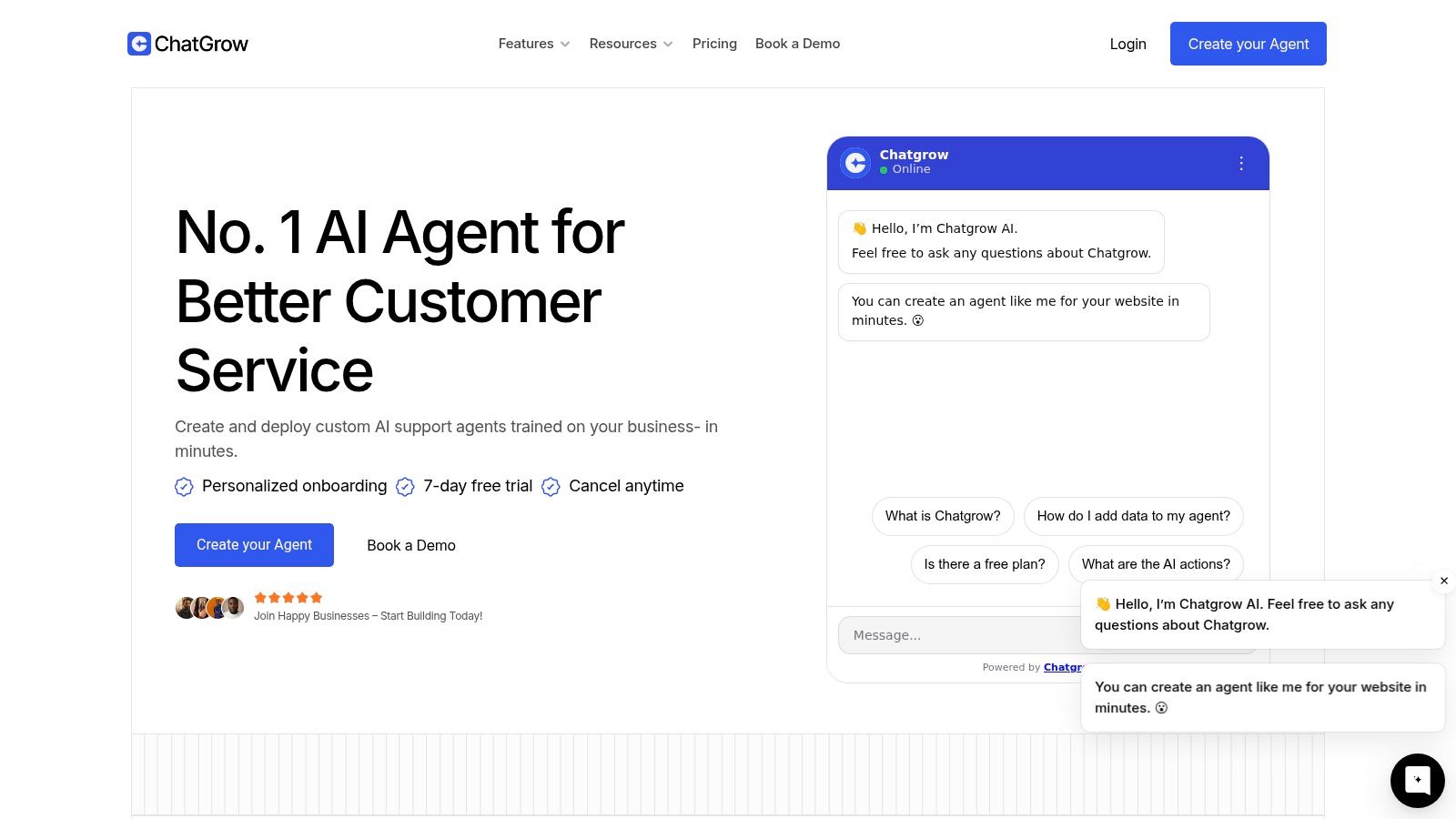
The biggest gain is conversational context. Forms capture fixed fields. A chat agent can ask why the visitor reached out, spot whether they want pricing or support, and adjust the next question based on the answer. That matters because, as noted earlier, many SMBs disqualify good leads when negative criteria are too rigid. An AI agent reduces that error by checking context before it sends a lead to the reject pile.
What an AI agent should qualify before a rep steps in
For most SMB websites, the agent should cover four jobs before sales gets involved:
Identify intent: separate potential buyers from support requests, job applicants, partners, and spam
Capture fit signals: ask about company type, role, use case, or service need
Capture buying context: learn urgency, pain point, budget range, or preferred next step
Create a usable record: pass a short summary into your CRM or inbox so the rep starts informed
That last point gets missed a lot. Qualification is not just about deciding whether a lead is good enough. It is about giving the next person enough context to act without repeating the same questions.
If you want a practical example of how this works on a website, Chatgrow's guide to chatbot use for lead generation shows how AI agents can detect visitor intent, ask qualifying questions, and escalate when human follow-up makes sense.
A practical website flow for a small agency
A small agency usually sees mixed inbound traffic. Potential clients, candidates, current customers, and random outreach all land on the same site. A generic form treats them as equals. An AI agent does not have to.
A simple flow works well:
The visitor opens chat.
The agent asks what they need help with.
If the message is sales-related, the agent asks one or two fit questions.
If fit is acceptable, the agent asks about the problem, timing, and desired outcome.
If the visitor is a job seeker, the agent routes them to the careers path.
If it is support or billing, the agent sends them to the right channel.
Good qualification flows also leave room for re-qualification. A visitor who looks weak on paper can still become sales-worthy if the conversation shows urgency, a strong use case, or a clear path to purchase. That is where AI agents outperform static forms. They can ask one more question instead of forcing a yes-or-no decision too early.
The conversation has to sound useful, not mechanical.
Examples:
“What are you trying to solve right now?”
“Is this for your own business or for a client?”
“How soon do you need a solution in place?”
“Do you want pricing, recommendations, or a quick conversation with the team?”
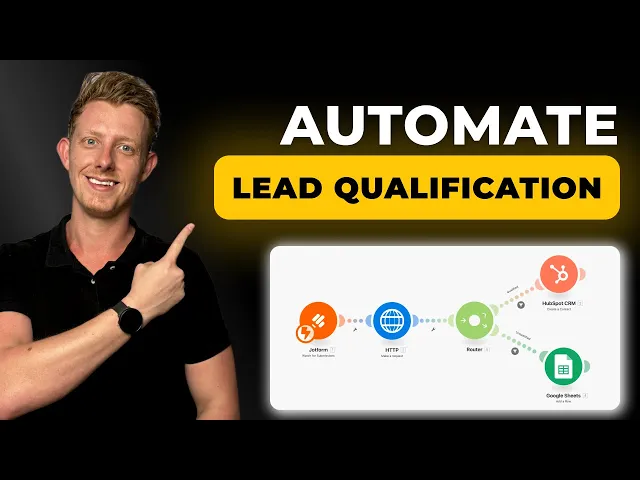
Later in the journey, video can help teams think through how the interaction should sound and flow:
Where automation stops and a human should take over
Automation works best at repetitive discovery and routing. It should not handle every high-value conversation from start to finish.
Hand the conversation to a person when:
the visitor asks detailed pricing or implementation questions
multiple stakeholders are involved
the use case is unusual but promising
the lead raises objections that need judgment
the conversation shows strong urgency or purchase intent
The best SMB setups use the agent to do the early sorting, context gathering, and initial qualification that would otherwise eat up rep time. Then a human steps in at the point where nuance affects win rate. That division of labor is what makes a small team feel larger than it is.
Defining Escalation Paths and Sales Handoffs
A qualified lead still has to move cleanly from system to person. If that handoff is messy, your qualification work gets wasted in the final few feet. Many SMBs struggle at this stage. They build routing logic, but they never define what sales needs to receive.

Define MQL and SQL in operational terms
The labels matter less than the rules behind them.
A marketing qualified lead should mean the lead matches enough fit and intent criteria to deserve sales review. A sales qualified lead should mean someone on the sales side has enough evidence to start an active opportunity process.
For a small business, keep the definitions tight:
MQL: good fit, valid contact details, relevant use case, clear inquiry
SQL: confirmed problem, right person or path to the right person, realistic purchase potential, next step agreed
What doesn't work is using vague definitions like “engaged lead” or “warm lead.” Those labels create arguments because each person interprets them differently.
What every handoff summary should include
When an AI agent or marketing workflow passes a lead to sales, the summary should be short and useful. A rep should be able to open the record and know how to start the call.
Include:
Lead source: Website chat, pricing page, inbound form, or referral
Stated need: The problem in the lead's own words
Business context: Industry, company type, or account notes
Role of contact: Founder, manager, specialist, assistant
Urgency signal: Immediate project, researching, replacing a tool, comparing vendors
Conversation highlights: Key objections, constraints, or questions asked
Requested next step: Demo, callback, quote, email follow-up
Sales reps don't need more fields. They need the few fields that change how they run the first conversation.
Set simple service rules
Most SMBs don't need a formal service-level agreement document on day one. They do need service rules that people follow.
A workable starting point looks like this:
Handoff rule | Operational expectation |
|---|---|
High-intent inbound | Route for same-day follow-up |
Clear SQL from chat | Include transcript summary and contact details |
Unclear but promising lead | Assign for manual review, not auto-reject |
Non-sales inquiry | Route out of sales immediately |
Rejected lead | Capture rejection reason in CRM |
If sales rejects leads, require a reason. That single step improves the system faster than another dashboard ever will because it gives marketing and operations something concrete to review.
Measuring and Optimizing Your Process
Lead qualification isn't a setup project you finish once. It's a working system. The signals change, your offer changes, and buyer behavior changes. If you don't review the process, drift sets in fast. Reps start bypassing fields, automation rules get stale, and disqualification logic becomes too blunt.
Watch the process, not just the outcomes
Organizations often only look at closed deals. That's too late. You also need to inspect the steps before the deal exists.
Useful review points include:
how many inbound leads are accepted by sales
how often sales disagrees with qualification decisions
how quickly qualified leads receive follow-up
whether certain disqualification reasons appear too often
which chatbot paths create strong conversations versus weak ones
For teams using conversational automation, chatbot analytics for qualification and support workflows can help surface where leads drop, where intent is misread, and where handoff quality needs work.
Treat disqualification as temporary unless proven otherwise
This is a commonly missed opportunity. Qualification is often treated as a one-time verdict. That leaves money on the table.
Fifty-four percent of disqualified leads convert into paying customers after re-engagement triggered by Smart Intent signals such as pricing page revisits or demo requests, according to RevenueHero's discussion of continuous lead qualification. That's a strong argument for dynamic re-qualification.
What this means in practice:
A lead said “not now” last month, then comes back to pricing. Re-open the record.
A contact was too junior initially, then returns with implementation questions. Re-evaluate.
A lead failed one fit criterion but shows repeated high-intent behavior. Review manually.
Don't think in terms of qualified versus disqualified forever. Think in terms of current status plus latest behavior.
Run a quarterly review that changes the system
A quarterly review should produce edits, not just observations.
Use a simple agenda:
Pull accepted, rejected, and re-engaged leads.
Review rejection reasons from sales.
Compare your top closed-won accounts against the current ICP.
Check whether negative criteria blocked good conversations.
Update chat prompts, routing logic, and scoring weights.
Document the changes so the team uses the same version.
The best optimization cycles are small and regular. You don't need a giant rebuild. You need the discipline to keep tuning what buyers are telling you.
Lead Qualification Process FAQs
How detailed should my process be at the start
Keep it lean. If you're building your first lead qualification process, start with a narrow ICP, a small set of qualification questions, and a basic handoff rule. Complexity feels advanced, but it usually creates low adoption. Your first version should be easy enough that every rep can follow it and every lead can move through it consistently.
Should every lead see the same qualifying questions
No. That's one reason static forms underperform. A buyer asking about pricing shouldn't get the same path as a job seeker or existing customer. Branch the flow based on intent first, then ask only the questions needed to decide the next step. Fewer relevant questions beat more generic ones.
What if my sales team says the process is too rigid
They're often reacting to bad implementation, not the idea of qualification itself. If the system blocks nuance, they'll ignore it. Give reps room to override a score with a reason, and review those overrides later. Good sales judgment should inform the model, not fight it.
Can a small business do this without a full RevOps team
Yes. Many small businesses can build a solid qualification machine with a CRM, website chat, clear stage definitions, and one person who owns the process. What matters is ownership. Someone has to maintain the ICP, update rules, review rejection reasons, and keep handoffs clean.
What's the biggest mistake to avoid
Trying to solve everything at once. Teams often build giant scoring matrices, long forms, and too many lifecycle stages before they've even defined a good lead. Start with fit, intent, and routing. Then improve from live conversations and sales feedback.
When should a lead be disqualified
Disqualify when there is a clear reason and a documented one. Examples include wrong inquiry type, no relevant use case, or a path that belongs in support instead of sales. But if the lead shows genuine buying intent, use one extra question or a manual review before closing the door.
If you want to put this into practice, Chatgrow gives small teams a practical way to qualify website visitors with AI agents, capture buying context, and hand strong conversations to humans with useful summaries instead of raw transcripts.
Related Posts
Continue Reading
More articles from the ChatGrow Team.