Blog
Lead Nurturing Automation: Workflows, KPIs, and AI Playbook
By
Nelson Uzenabor

You're probably staring at a CRM full of decent leads that never seem to move, plus a sales team that keeps asking which contacts are ready. The problem usually isn't lead capture. It's what happens after capture, when too many programs still behave like scheduled email blasts instead of a system that reacts to intent, scores behavior, and hands the right people to sales at the right time.
Lead nurturing automation is the part of the stack that makes that post-capture motion repeatable. It's the difference between hoping someone reads the next email and building a workflow that notices a pricing-page visit, changes the lead's path, and escalates only when the signal is strong enough to justify human follow-up. That matters because nurtured leads are associated with 65% more sales growth on the high-performing side of the gap, while also producing 50% more sales-ready leads at 33% lower cost in the consolidated numbers cited in the field Venture Harbour.
For a practical refresher on the broader discipline, this lead nurturing guide from MakeAutomation is a useful companion. The more important point, though, is that automation is now about trigger design, scoring thresholds, and handoff rules, not just cadence.
Table of Contents
What Lead Nurturing Automation Actually Means
You get the lead. The form fires. The hand-raisers land in the CRM. Then the follow-up turns into a tangle of reminders, spreadsheets, and “did anyone email them yet?” messages. That's usually where manual nurture falls apart, because the system depends on memory instead of rules.
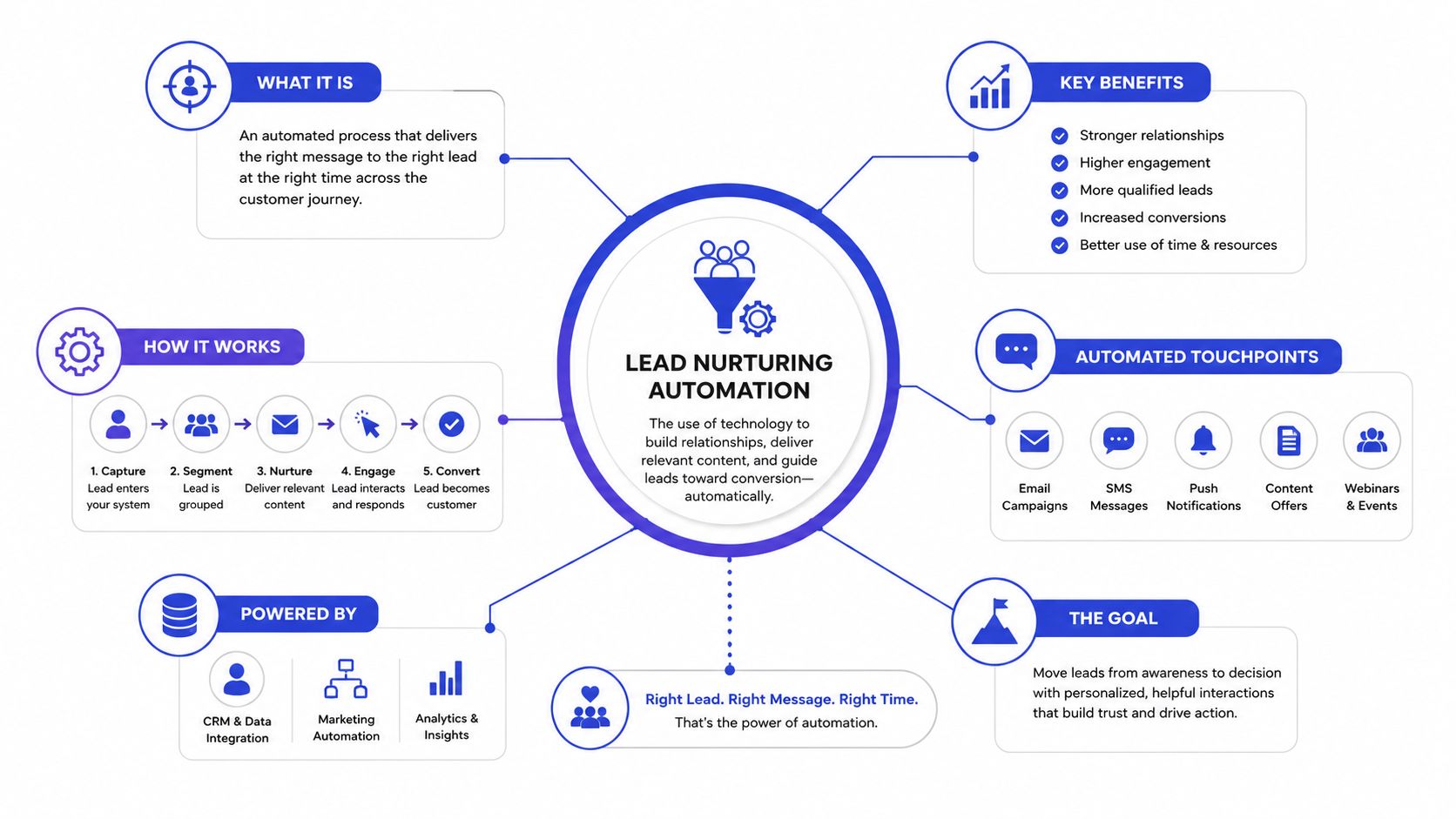
Lead nurturing automation is a workflow that responds to lead behavior without requiring someone to push every next step by hand. It automates the mechanics, such as triggering, segmentation, scoring, message routing, and handoff, while humans keep the parts that still need judgment, like strategy, copy review, exception handling, and sales escalation.
Good nurture automation acts as a triage nurse, not a switchboard operator. A switchboard operator connects every call the same way. A triage nurse looks at symptoms, urgency, and context, then routes people to the right next step. Good nurture automation does the same thing for leads.
The operational pieces are straightforward:
Triggers start the workflow, usually after a form fill, page visit, chat interaction, or download.
Segments group leads by source, intent, or behavior.
Scores assign weight to actions and fit signals.
Send logic decides which message or channel to use next.
Handoff rules determine when sales should take over, or when a lead should stay in education mode.
The self-check is simple. If your team still sends the same sequence to everyone, on the same schedule, with no score-based routing, you're running scheduled sends, not true automation. The goal is a system that reacts to intent and protects sales time for the contacts most likely to convert.
Practical rule: if a lead's behavior can't change what happens next, the workflow isn't automated enough.
The Business Value and KPI Case
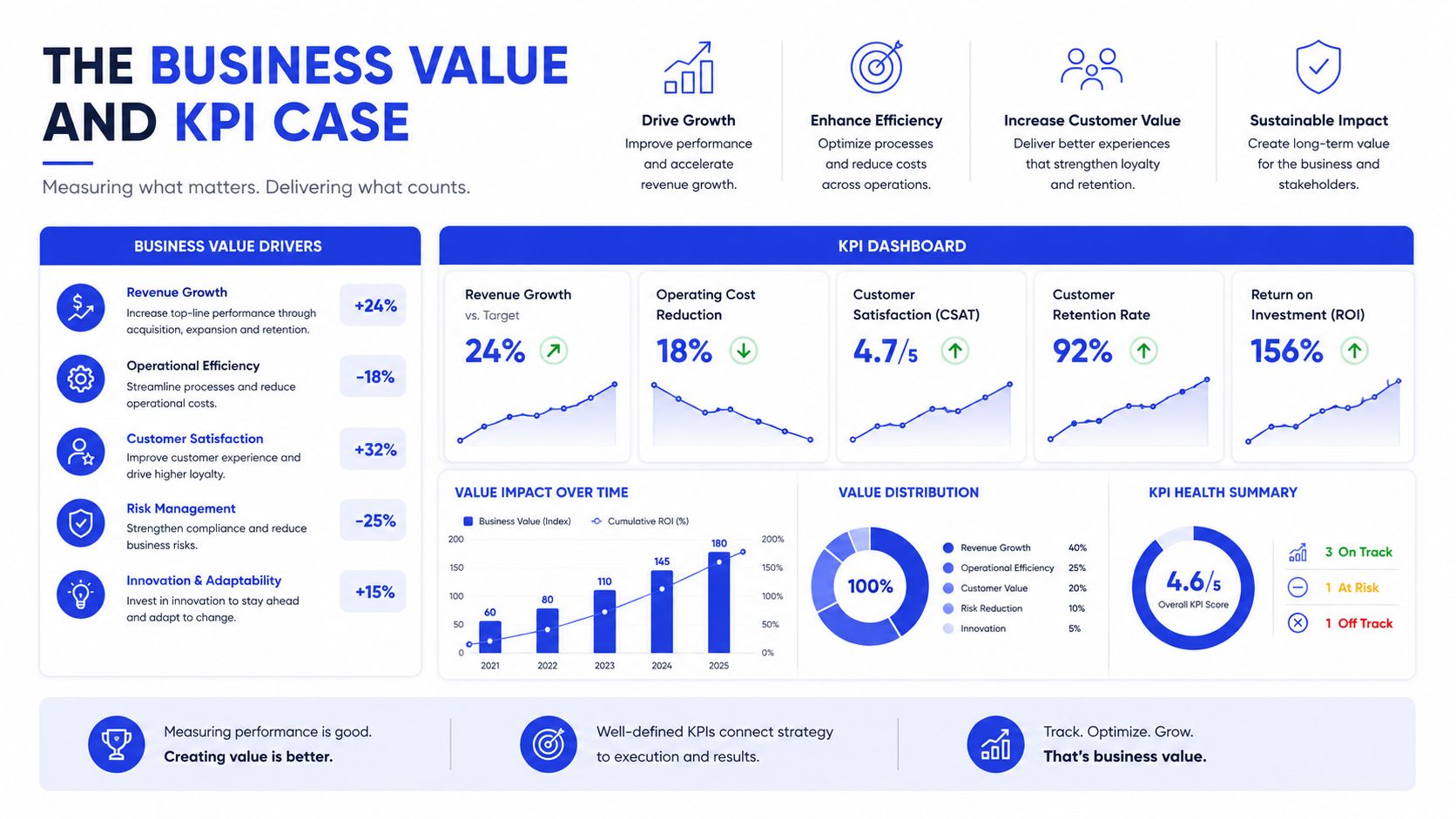
A nurture program earns its keep when it changes what happens after capture. The test is whether a lead moves to the right path, gets scored correctly, and reaches sales only when the handoff rules say it should. That is where lead quality, speed to revenue, and forecast accuracy start to move in the same direction.
The business case shows up in revenue quality, not inbox activity. Benchmarks from Venture Harbour point to 50% more sales-ready leads, 33% lower cost, 47% larger purchases, and a 23% shorter sales cycle when nurturing is done well. Those figures are useful because they translate into operating decisions, like whether marketing should increase spend, whether sales can trust routing, and whether the team is handing off leads too early or too late.
What belongs on the dashboard
A useful nurture dashboard tracks the metrics that affect pipeline decisions, not vanity activity. Opens and clicks can tell you whether a message landed, but they do not tell you whether the workflow created revenue.
Pipeline generated from nurture, because that shows whether the workflow is creating real opportunities.
MQL-to-SQL movement, because that reveals whether the scoring model and handoff rules are aligned with sales expectations.
Cost per sales-ready lead, because it shows whether automation is reducing the effort required to get a qualified contact to sales.
Time to revenue, because nurture should shorten the gap between first intent and purchase.
Deal value from nurtured leads, because larger deals change the economics of the program.
If a sequence drives engagement but does not change pipeline, it is a content path, not a growth system. That distinction matters because teams often optimize for the easiest metric to move, then wonder why revenue does not follow.
For a closer look at qualification thresholds and how to define a sales-ready lead, the guide on marketing qualified leads is useful context. The KPI set should mirror the actual post-capture handoff path, including the point where a contact becomes ready for sales, or stays in nurture until the signal is stronger.
Anatomy of an Automated Nurture Workflow
A working workflow starts before the first email is ever sent. The system has to capture the event, understand what it means, and decide whether the lead deserves more education, faster escalation, or no further action.
From signal to sequence
A basic path looks like this. A visitor submits a form, clicks a product page, or opens a chat. The platform records the event, adds or updates the lead in the CRM, and checks the person against your segmentation rules. If the behavior suggests intent, the lead score rises and the workflow pushes them into the next sequence. If the behavior is weak, the lead stays in a lighter education track.
That structure matters because not all touchpoints mean the same thing. A pricing-page visit is stronger than a blog read. A demo request is stronger than a newsletter signup. Your automation should treat those signals differently instead of dumping them into one catch-all drip.
Where data hygiene sits
Consent and field quality have to sit upstream of the workflow. If CRM data is duplicated, stale, or missing consent status, scoring and routing can break fast. A lead can get the wrong sequence, two reps can get the same contact, or an unqualified prospect can be passed to sales too early.
A useful mental model is this:
Capture the event from web, chat, or form activity.
Standardize the record in the CRM.
Score the lead against behavior and fit.
Route the lead into a sequence that matches intent.
Escalate when the threshold says sales should take over.
Review outcomes and refine the logic.
The last step is the one teams skip most often. A workflow that never gets retrained turns into a museum piece. The point is to keep testing which events predict conversion and which ones just create noise.
The cleanest nurture systems aren't the most complex. They're the ones where each lead moves for a reason the team can explain.
A short video walkthrough can also help teams visualize the flow before building it in a platform.
Triggers, Scoring, and the Sales Handoff
Most nurture advice stays at the level of “segment your list” and “personalize your emails.” The decision comes after capture. Which trigger is strong enough to change the path, and which score should end the automation and put a human on the task?
Build around trigger strength
A practical trigger taxonomy starts with first-party behavior, then adds stronger external context when available.
First-party signals include page visits, downloads, clicks, and form fills.
Second-party signals come from partner or platform data that shows deeper engagement patterns.
Third-party intent can help identify broader buying movement, especially when a lead is active beyond your site.
The best trigger design keeps these signals separate. A pricing-page visit should not behave like a casual blog read. A contact who keeps returning to comparison pages should not sit in the same nurture lane as someone who only opened a welcome email.
Score for action, not for decoration
If you want the scoring model to work, define positive weights, negative weights, and decay rules before launch. Give stronger actions more value. Subtract points for inactivity. Let scores cool off over time if the lead goes quiet. Then set one or two thresholds that matter.
That's the part many teams miss. They build sprawling drip trees, but they never define the score at which sales should intervene. A cleaner model often wins, because fewer segments with explicit escalation criteria are easier to maintain and easier for sales to trust.
If you're refining the model, this guide to optimize your lead scoring system is a useful reference point for thinking about fit and behavior together.
Make handoff rules explicit
The handoff rule should answer three questions. What signal promotes the lead, who gets notified, and what happens if the lead is not ready yet? If a prospect hits the threshold, sales gets the summary. If the score is below threshold but the prospect shows a meaningful signal, they stay in nurture. If the record is clearly a poor fit, they should be disqualified or routed out.
That's where automation and sales alignment either works or fails. A bad handoff looks like a rep calling too early, the prospect repeating the same context to three different people, and marketing claiming the lead was “engaged” while sales says it was never ready. The fix is not more messages. It's tighter rules.
For a related implementation view, the internal note on automated lead scoring aligns with this approach. It reinforces the idea that scoring should decide who stays in nurture, who gets lighter outreach, and who gets escalated.
Ready-to-Use Sequence Playbooks
A good nurture system doesn't need a dozen flows on day one. It needs a few sequences that match the moments that matter. These three are the ones I'd ship first because they cover acquisition, recovery, and high-intent buying behavior.
Welcome track for new subscribers
Start this when someone signs up from a blog, webinar, or newsletter form. The first message should arrive immediately with a simple subject line such as Welcome, here's what you can expect. That message should orient, not sell. The second email can go out a few days later with a useful asset or product overview. The third can ask for a soft engagement, like a preference update or content choice.
The exit condition is easy. If the lead clicks into product content or books a meeting, they leave the welcome track and move into a stronger nurture or sales sequence. If they stay passive, keep them in education mode and reduce frequency instead of pushing harder.
Re-engagement track for stalled opportunities
Use this when an opportunity has gone quiet after prior engagement. The tone should acknowledge the pause without sounding needy. A subject line like Still evaluating this? works better than a promotional blast because it signals continuity.
The sequence should be short. One reminder, one value message, one final check-in. If there's no response, stop the sequence and let the contact cool off. That avoids training your team to chase every silent lead forever.
High-intent track for pricing-page visitors
Intent gets operational here. If someone visits pricing, compares plans, or returns to product pages, move them into a fast track. The first message should speak directly to the buying question they just raised. The second can answer objections. The third should offer a direct path to sales or a demo.
High-intent nurture should feel responsive, not invasive.
For SMS-led variations and channel timing considerations, the SMS drip campaign insights from CartBoss are useful context when you're deciding whether text belongs in the sequence. The key is to keep the channel choice tied to behavior, not fashion.
Tools, Integrations, and the AI Agent Layer
The stack should be organized by function, not by vendor hype. The CRM stays the source of truth. The marketing automation platform handles orchestration. Content tools and landing pages create the assets. Analytics tools show what's happening. Then there's a newer layer, always-on AI agents that qualify inbound traffic at the point of intent.
How the stack should connect
The CRM needs to receive every meaningful interaction, not just final form fills. The automation platform should read from that record, apply score logic, and trigger the next workflow. Analytics should then confirm which paths created opportunities, not just engagement.
That integration pattern matters because nurture is only as good as the data it receives. If chat, web behavior, and CRM history sit in different silos, the lead gets treated like a stranger each time they show up. The workflow gets slower, less relevant, and more annoying for sales.
Where an AI agent fits
A 24/7 agent like Chatgrow can sit on high-intent pages and qualify visitors in real time by answering FAQs, capturing buying context, and passing a concise summary to the CRM or inbox for follow-up. That makes the rest of the nurture system cleaner, because sales and automation receive warmer inputs with better context. For a closer look at the operating model, the internal piece on AI agent for business covers the role of always-on conversation handling.
The practical advantage isn't novelty. It's better routing. If the agent learns that a visitor is on the pricing page, has a specific use case, and wants implementation details, the nurture workflow can skip generic education and move straight to the right path.
Measuring Impact Beyond Opens and Clicks
Opens and clicks still have a place, but they're not enough to judge business impact. A sequence can look active and still fail to move pipeline. That's why measurement has to be anchored in conversion outcomes and CRM stage movement.
The metrics that deserve attention
A starter dashboard should focus on whether nurture is creating and accelerating revenue.
MQL-to-SQL conversion shows whether qualification and handoff are working.
Opportunity creation from nurture shows whether the workflow is producing real pipeline.
Pipeline velocity shows whether nurture is helping deals move faster.
Cost per sales-ready lead shows whether automation is making qualification more efficient.
Influenced revenue shows whether nurture is contributing to closed business, not just engagement.
How to make attribution usable
The instrumentation has to be disciplined. UTM tags should be consistent. CRM stages should be mapped in a way sales uses. Source-of-conversion tracking should be clean enough that a lead's path can be traced back to the nurture touchpoints that mattered.
If a sequence underperforms, don't keep it alive because it has a high open rate. Retire it when the path produces weak pipeline, then rebuild the entry trigger, the message, or the handoff rule. If it produces real opportunities but weak closes, the issue may be sales follow-up or qualification, not nurture copy.
The clearest sign of maturity is when the team stops asking, “Did they click?” and starts asking, “Did this signal deserve automation at all?”
Your 30-Day Launch Plan and Final Checklist
Start with the plumbing, not the copy. Week one should clean up CRM fields, standardize source values, and confirm consent capture. Week two should define the first segments, the scoring model, and the handoff thresholds. Week three should build the first two sequences and add an AI qualification entry point on the highest-intent pages. Week four should connect sales notifications, stage mapping, and the KPI dashboard.
A launch is only useful if it survives the first review. Before the month ends, check whether each trigger has a clear purpose, whether each score threshold maps to a real action, and whether sales knows what to do when a lead crosses that line.
Use this final checklist:
Trigger definitions are documented and tied to behavior.
Scoring thresholds produce a clear sales or nurture decision.
Disqualification rules exist for poor-fit leads.
Content review cadence is scheduled so sequences don't go stale.
Dashboard metrics reflect pipeline, not just activity.
90-day review is on the calendar to retrain the rules based on outcomes.
A lean system that gets reviewed beats a complex system that nobody trusts. Ship the first version, watch where leads stall, and let the data change the rules.
A CTA for Chatgrow.
Related Posts
Continue Reading
More articles from the ChatGrow Team.