Blog
What Is Sales Prospecting? a Definitive Guide for 2026
By
Nelson Uzenabor

Sales prospecting is the top-of-funnel work of identifying, researching, and contacting people or companies that fit your ideal customer profile, so your team spends time on likely buyers instead of random names. It's also the sales activity many find the most difficult, with 42% of salespeople saying prospecting is harder than closing or qualifying.
If you're reading this, there's a good chance your situation looks familiar. You have a solid product, a reasonable offer, and a team willing to sell, but the pipeline still feels uneven. Some weeks look promising. Other weeks feel like your reps are throwing lines into the water and hoping something bites.
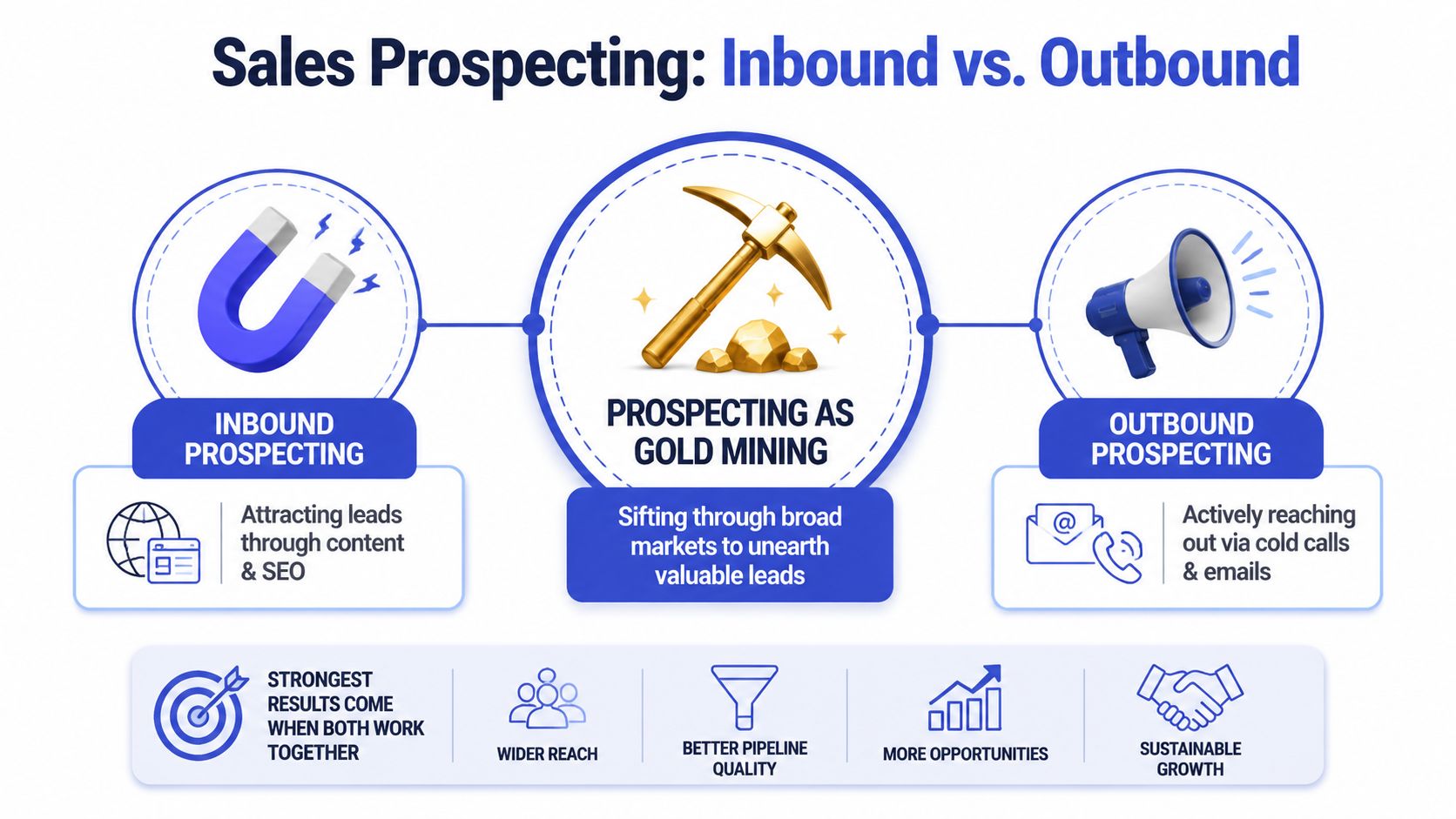
That's why I like a simple analogy. Sales prospecting is a lot like mining for gold. You don't dig everywhere. You choose the ground carefully, test for signs of value, and then spend your energy where there's a real chance of payoff. In sales, that means sifting through a broad market to find the people who match your best-customer pattern before you ever try to pitch them.
A lot of guides stop at manual outreach. They teach cold emails, call blocks, and LinkedIn messages as if prospecting starts the moment a rep presses send. That's no longer the full picture. Modern teams increasingly use AI-driven qualification at the very top of the funnel so a human rep enters the conversation later, with more context and less guesswork.
Table of Contents
Why Sales Prospecting Is Your Team's Toughest Challenge
Prospecting is where good sales plans usually break first. According to Spotio's roundup of sales statistics, 42% of salespeople say prospecting is harder than closing (36%) or qualifying (22%). That lines up with what most sales managers see on the floor. Reps usually don't fail because they can't talk. They fail because they talk to the wrong people, too late, with too little context.
A weak prospecting process creates a chain reaction. Marketing hands over names. Reps chase them. Meetings don't materialize. Then everyone starts blaming the script, the offer, the pricing, or the market. Sometimes those things are real issues. Often, the bigger problem is simpler. The team never built a reliable system for finding fit and timing.
Why it feels harder than closing
Closing has structure. You're usually talking to someone who has already shown enough interest to stay in the conversation. Prospecting is messier. You're trying to identify fit, catch intent, and earn attention from people who are busy and may not know you at all.
That's why prospecting often feels less like sales and more like detective work.
Practical rule: If your reps spend most of their day figuring out who to talk to, they aren't selling yet. They're still trying to locate the opportunity.
The real challenge isn't effort
New BDRs often assume prospecting is a volume problem. More dials. More emails. More LinkedIn messages. More hours. But brute force only goes so far. Teams need a repeatable process that filters the market before the rep begins outreach.
That process starts with a clear definition of the ideal customer. Then it moves into research, qualification, outreach planning, and measurement. Today, it also includes AI tools that can detect intent and qualify visitors before a rep ever joins the thread.
Prospecting is still hard. But it's not mysterious. Once you treat it like a system instead of a hustle contest, it becomes manageable.
Defining Sales Prospecting Inbound vs Outbound
Sales prospecting is the systematic top-of-funnel process of identifying, researching, and initiating contact with potential customers who align with an Ideal Customer Profile, as described by SalesHive's guide to sales prospecting. In plain English, it's how you turn a huge market into a short list of people worth pursuing.
The gold-mining analogy helps here. A market is the whole mountain. A lead is raw material you've found. A prospect is the portion that looks promising enough to test further. You haven't made the sale yet. You've just found something worth working on.
Prospecting starts before the pitch
Confusion often arises here. Prospecting is not the same thing as lead generation, and it's not the same thing as closing.
Marketing usually creates awareness and captures interest. Sales prospecting takes the next step. It asks: Is this account a fit? Is this person the right contact? Is there a problem we can solve? Is the timing workable? Only after that should a rep move into a true sales conversation.
A simple example helps.
Lead generation: Someone downloads a guide from your website.
Prospecting: A rep checks whether that person works at a company that matches your ICP, whether they influence buying, and whether their activity suggests real intent.
Selling: The rep starts a conversation tied to the buyer's problem and business context.
A lead says, "Someone showed interest." A prospect says, "This is someone worth engaging."
Inbound and outbound are different motions
Sales organizations often use both inbound and outbound prospecting. They just start from different directions.
Inbound prospecting means the buyer raises a hand first, even if only slightly. They visit key pages, download content, join a webinar, or ask a question. Your job is to qualify that interest and turn it into a sales conversation.
Outbound prospecting means your team goes first. You identify likely-fit accounts and reach out through email, phone, social platforms, or other channels.
Here's the simplest way to think about them.
Aspect | Inbound Prospecting ("Magnet") | Outbound Prospecting ("Megaphone") |
|---|---|---|
Starting point | Buyer shows interest first | Sales team initiates contact |
Typical signal | Website visits, content engagement, demo interest | ICP match, firmographic fit, trigger events |
Rep's first job | Qualify the interest | Create the interest |
Best use case | Capturing existing demand | Creating pipeline where demand isn't visible yet |
Main strength | Better timing and context | More control over who enters pipeline |
Main risk | Too many low-quality hand-raisers | Too much effort spent on poor-fit accounts |
A lot of companies mistakenly treat inbound as "easy leads" and outbound as "hard cold work." That's too simplistic. Inbound still needs qualification, and outbound can be highly intelligent when reps use strong ICP filters and relevant signals.
The strongest teams don't argue about which one is better. They decide where each motion fits and build a process around both.
A Step-by-Step Modern Prospecting Workflow
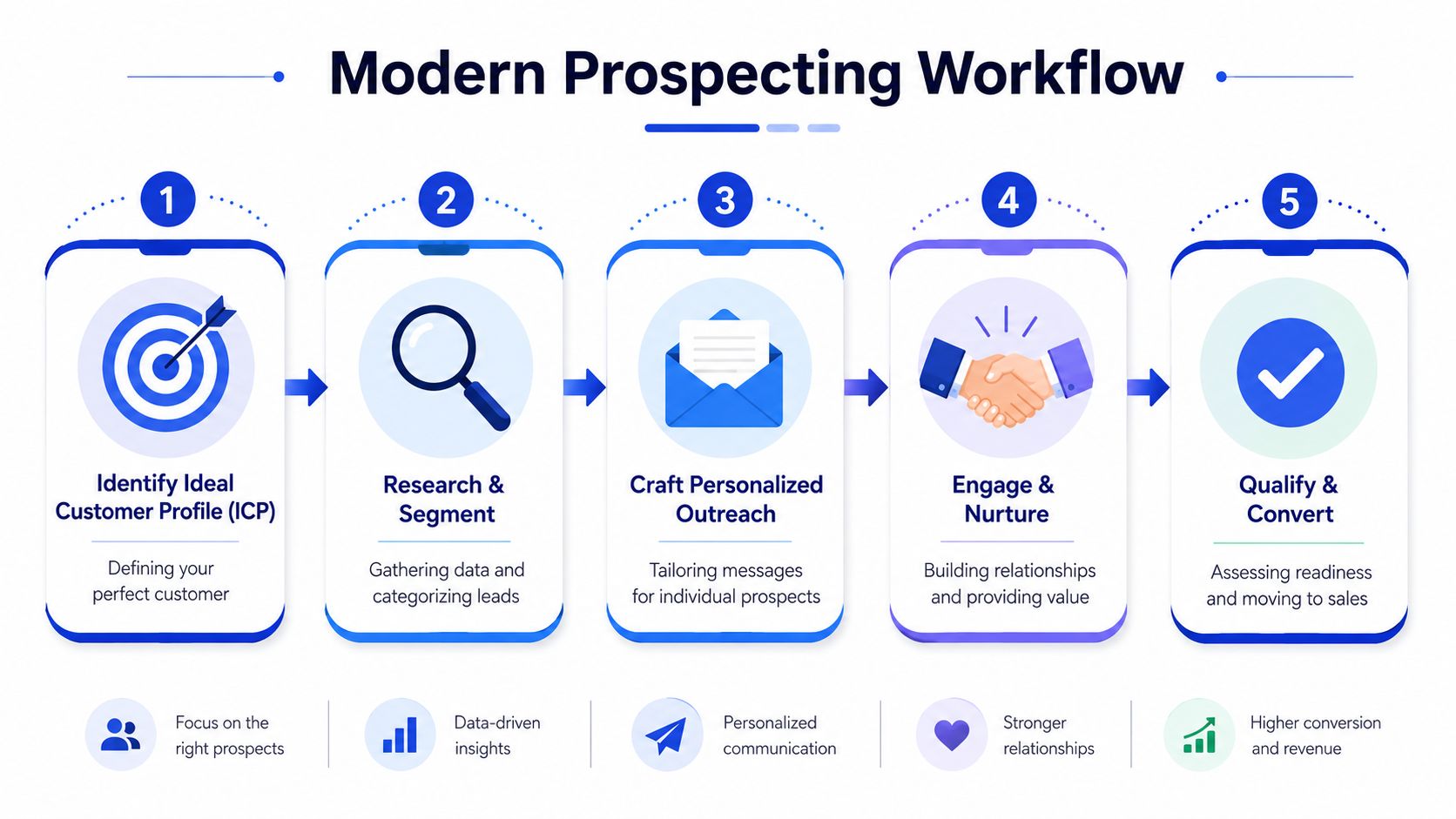
The best prospecting systems are boring in a good way. They're clear, repeatable, and easy to coach. According to Apollo's explanation of sales prospecting, effective prospecting requires five mandatory components: ICP definition, contact discovery, multi-channel engagement, qualification criteria, and performance measurement. Apollo also notes that missing any one of these can degrade pipeline throughput by 25–40%.
That matters because many teams don't have a prospecting problem. They have a workflow gap. One rep is building lists manually. Another is sending generic emails. A third is booking meetings that shouldn't have been accepted in the first place.
The five parts that keep the system working
Define your ICP first
Start with the companies and buyers you serve best. Industry, company size, buying role, use case, and common pain points all belong here. If your ICP is fuzzy, everything downstream gets sloppy. Your messaging drifts, your list quality falls, and reps waste time on accounts that were never likely to buy.Discover and research contacts
Once the account fits, find the right humans inside it. Then do enough research to make your first message relevant. This isn't about writing essays in your CRM. It's about spotting the details that change your outreach from generic to useful.Plan multi-channel engagement
Good prospecting doesn't rely on one channel. Some buyers respond to email. Others notice LinkedIn first. Some only engage after several touches spread over time. The point is consistency, not chaos.Use qualification criteria early
Don't wait until the discovery call to decide whether the opportunity is real. Add simple criteria early. Does this person influence the purchase? Does the company match your target use case? Is there a clear problem to solve? If not, the rep should know quickly.Measure and adjust
Every prospecting motion leaves clues. Which industries respond? Which titles ignore you? Which messages earn meetings but produce poor-fit deals? Teams improve when they review these patterns regularly.
For companies that want the very top of the funnel to work harder, it helps to study how a chatbot for lead generation fits into this workflow. The key idea is simple. Qualification doesn't have to begin with an SDR's first email. It can start the moment a visitor lands on a high-intent page.
Where new teams usually get stuck
Most new BDRs don't struggle with effort. They struggle with sequencing. They start by writing a message before they know who they're writing to and why this person should care now.
That leads to a familiar pattern:
Loose targeting: The list is broad, but the fit is weak.
Thin research: The rep knows the title, not the context.
Random outreach: Messages go out without a planned rhythm.
Late qualification: Bad-fit accounts stay in the pipeline too long.
Build the machine in the right order. ICP first. Contacts second. Messaging third. Qualification throughout.
When prospecting feels chaotic, go back to the workflow. Disorder at the top of the funnel usually means one of those five parts is missing or poorly defined.
Key Metrics and KPIs for Prospecting Success
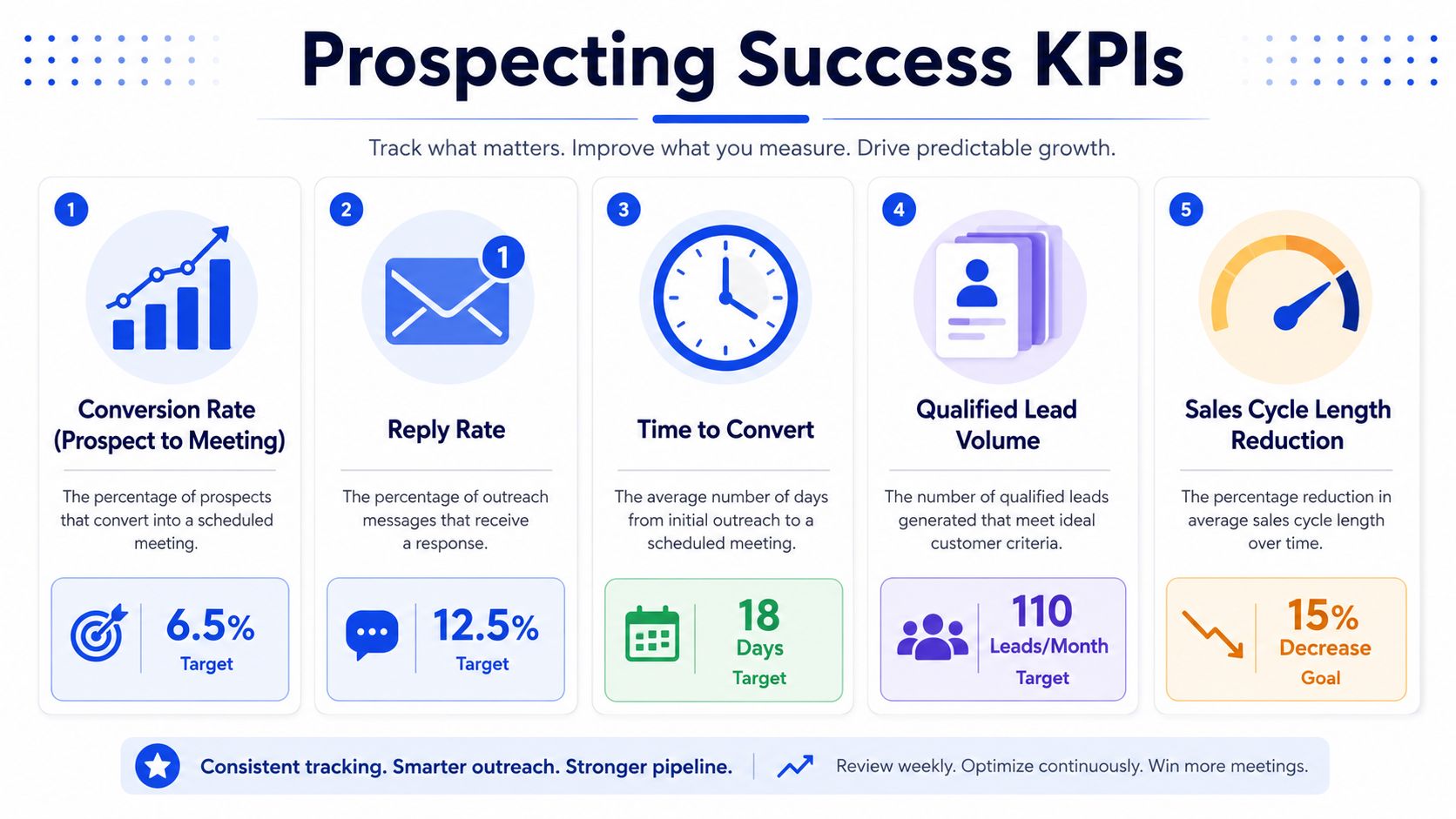
Prospecting metrics should tell you whether your team is creating useful conversations, not just activity. A dashboard full of raw output can look busy while pipeline quality gradually erodes. That's why sales managers need a small set of KPIs tied to fit, movement, and conversion.
What your dashboard should actually tell you
I'd watch five categories closely.
Qualified prospects created: How many names entered the funnel after meeting your baseline fit criteria.
Meetings booked: How many prospecting efforts turned into real conversations.
Qualification rate: How many booked meetings were actually worth an AE's time.
Time to first meaningful response: How long it takes to move from first touch to actual engagement.
Pipeline created from prospecting: Whether this activity produces real opportunities, not just calendar invites.
None of these metrics should live alone. Meetings booked can look great while qualification quality drops. Qualified prospects can rise while response quality falls. The dashboard only helps when you read the measures together.
How to read the story behind the numbers
If outreach volume is high but meetings stay low, the problem is usually one of three things: poor targeting, weak messaging, or bad timing. If meetings are high but opportunities stall, qualification is likely too loose. If your reps book strong meetings but pipeline remains thin, your ICP may be too narrow or your contact coverage too shallow.
Channel-level analysis is beneficial, as email, phone, LinkedIn, and website conversations each tell a different story. Teams running outbound should also understand the key metrics for email outreach campaigns so they can separate deliverability issues from targeting or copy problems.
A lead qualification framework matters here too. If you want a practical way to tighten handoff standards between prospecting and sales, this guide to the lead qualification process is worth reviewing.
Metrics are only useful when they help a manager coach behavior. If a KPI doesn't change action, it's just decoration.
One more caution. Don't let vanity metrics dominate your review. Open rates, click rates, and total touches can be useful clues, but they are not the final test. The final test is simple: did your prospecting create good sales conversations with people who can buy?
Best Practices and Common Prospecting Pitfalls
Prospecting rewards discipline. It punishes impatience, laziness, and lazy assumptions. The teams that do it well usually follow a few rules consistently, even when their tools and markets differ.
One of the most overlooked rules is market selection. According to Better Proposals' review of overlooked prospecting techniques, 58% of prospecting failures in 2025 were due to targeting stagnant industries instead of emerging ones. That should change how you build lists. A solid message sent to the wrong sector at the wrong time still underperforms.
Rules that make prospecting work
Personalize or get ignored
Personalization doesn't mean adding a first name and company name to a template. It means showing that you understand the buyer's situation. Mention the role, the likely problem, the business context, or the reason now matters.
Good outreach feels like it was written for a person. Bad outreach feels like it survived a mail merge.
Persistence beats premature quitting
Many reps give up before the prospect even notices them. Strong prospecting requires follow-up discipline across channels. If a buyer doesn't respond to one email, that doesn't automatically mean there's no fit. It may mean the message arrived at the wrong moment, on the wrong channel, with the wrong angle.
Prospect where movement exists
A stagnant market creates drag. Budgets tighten, priorities freeze, and projects stall. A growing or disrupted market gives your team more openings because people are already reevaluating tools, partners, and systems.
That doesn't mean abandoning whole verticals forever. It means ranking industries by momentum instead of habit.
The best list in the world isn't just a list of matching companies. It's a list of matching companies with a reason to act.
Mistakes that waste rep time
Some prospecting mistakes are easy to recognize once you know the pattern.
Spraying broad lists: Reps contact too many weak-fit accounts because the team confuses list size with pipeline health.
Using generic messaging: The copy could apply to anyone, so it feels relevant to no one.
Skipping research: The rep reaches out without understanding the account, the role, or the likely pain point.
Counting activity as progress: Managers praise output while ignoring whether those touches produce qualified conversations.
Targeting dead zones: Teams keep working stale industries because "that's who we've always sold to."
The professional version of prospecting is calmer than people expect. It's not frantic. It's selective, steady, and informed.
Automating Lead Qualification with AI Chat Agents
For years, sales teams treated prospecting as almost entirely manual work. Reps built lists, researched contacts, and initiated conversations one by one. That model still exists, but it no longer explains the full top of funnel.
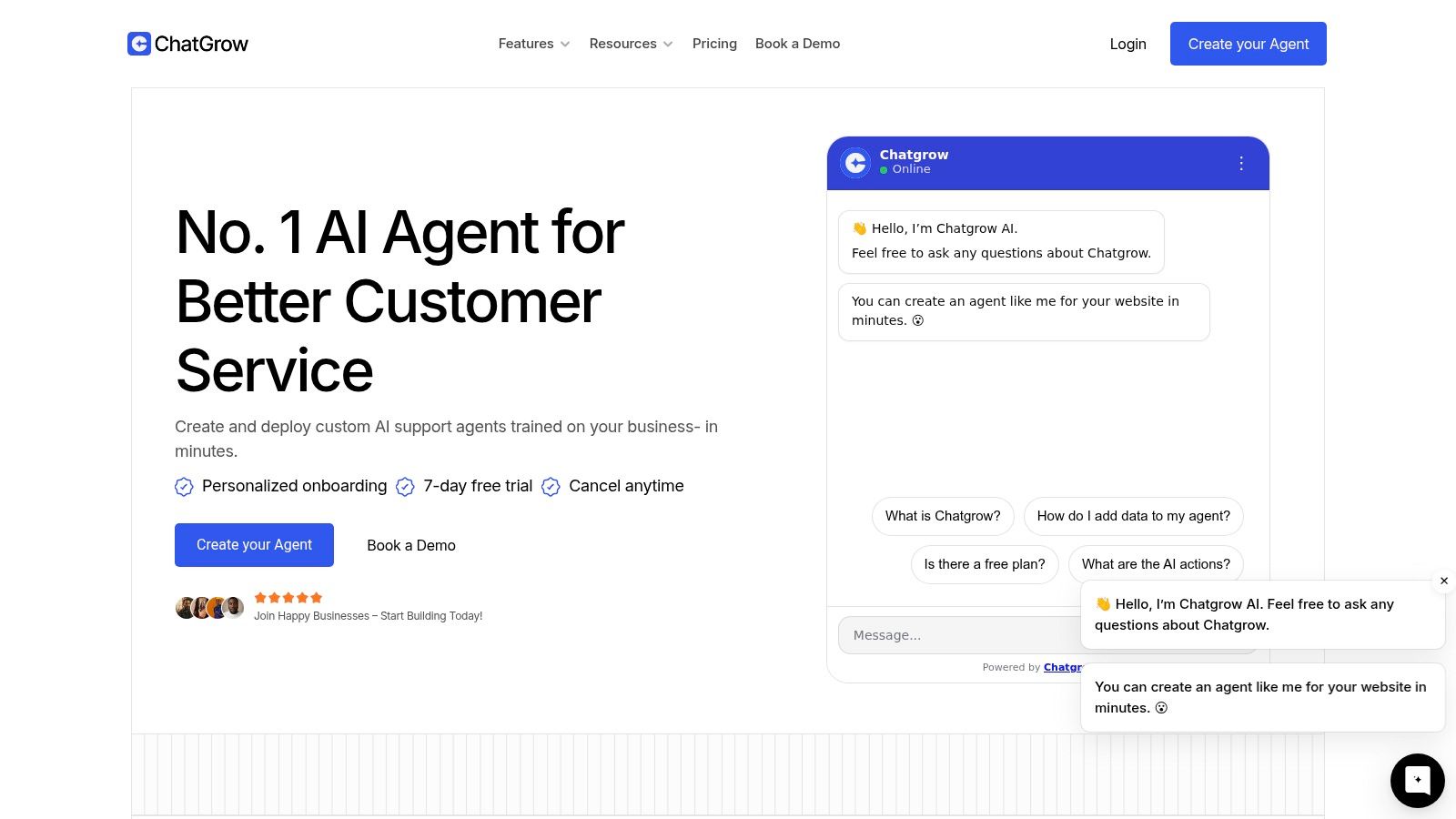
Highspot's perspective on sales prospecting notes that 68% of sales leaders now use AI to identify high-fit prospects before outreach, and that smart intent agents are qualifying leads 24/7 on pricing and FAQ pages. That shift matters because some of the most useful prospecting signals now appear before a rep sends a single message.
Why manual-only prospecting is fading
A visitor who spends time on your pricing page is often giving you better context than a purchased contact list ever could. The same goes for someone reading support documentation, comparing plans, or asking detailed pre-sales questions. Those actions are signals. Traditional outbound prospecting often misses them unless someone on the team is watching closely.
AI chat agents help capture and structure that intent in real time. Instead of waiting for a form fill or hoping a rep notices a key visit, the system can engage the visitor immediately, ask qualification questions, and pass along the conversation when human follow-up makes sense.
That changes the role of the rep. Instead of starting from zero, the rep starts with context.
What AI chat agents do before a rep steps in
A useful AI qualification layer does a few things well:
It engages on high-intent pages: Pricing, FAQ, product, and demo pages are common examples.
It asks practical questions: Company size, use case, urgency, and fit cues help sort serious buyers from casual visitors.
It captures intent without friction: Visitors can ask questions naturally instead of filling out a stiff form.
It routes clean handoffs: When a lead is worth follow-up, the rep gets a summary instead of a blank record.
This is a helpful overview of how modern lead qualification tools support that handoff between automation and sales.
The video below shows the broader category in action.
AI doesn't replace prospecting strategy. It sharpens it. You still need a clear ICP, qualification rules, and thoughtful follow-up. But AI can remove a lot of low-value manual effort from the earliest stage.
Let automation collect signals and basic qualification. Let humans handle judgment, nuance, and deal movement.
That's the smarter model for modern prospecting. A machine filters. A rep engages. Both do the part they're best at.
From Prospect to Customer Your Path Forward
If you strip away the jargon, what is sales prospecting really about? It's about finding the right buyers early, qualifying them carefully, and entering the conversation with enough context to be useful.
The old model leaned heavily on manual research and brute-force outreach. The better model blends classic sales discipline with modern signal capture. You still need a tight ICP, sharp messaging, and follow-up habits. But now you can add automation that spots intent, starts qualification, and gives reps cleaner opportunities to pursue.
That's a healthier way to build pipeline for 2026. It asks your team to work with more precision, not just more effort.
If you want a broader view of where this is heading, Starnus's take on AI sales tools offers a useful look at how teams are speeding up lead qualification without removing the human element.
Pick one part of your current process and tighten it this week. Clarify your ICP. Rework your qualification rules. Improve your handoff. Add an intent-capture layer to your site. Prospecting improves fastest when you stop treating it like guesswork.
If you want to turn more website visits into qualified conversations, Chatgrow helps you deploy AI agents that answer questions, capture buying intent, and qualify leads around the clock on pages like pricing, product, and FAQs. It's a practical way to make your top of funnel smarter before your sales team steps in.
Related Posts
Continue Reading
More articles from the ChatGrow Team.